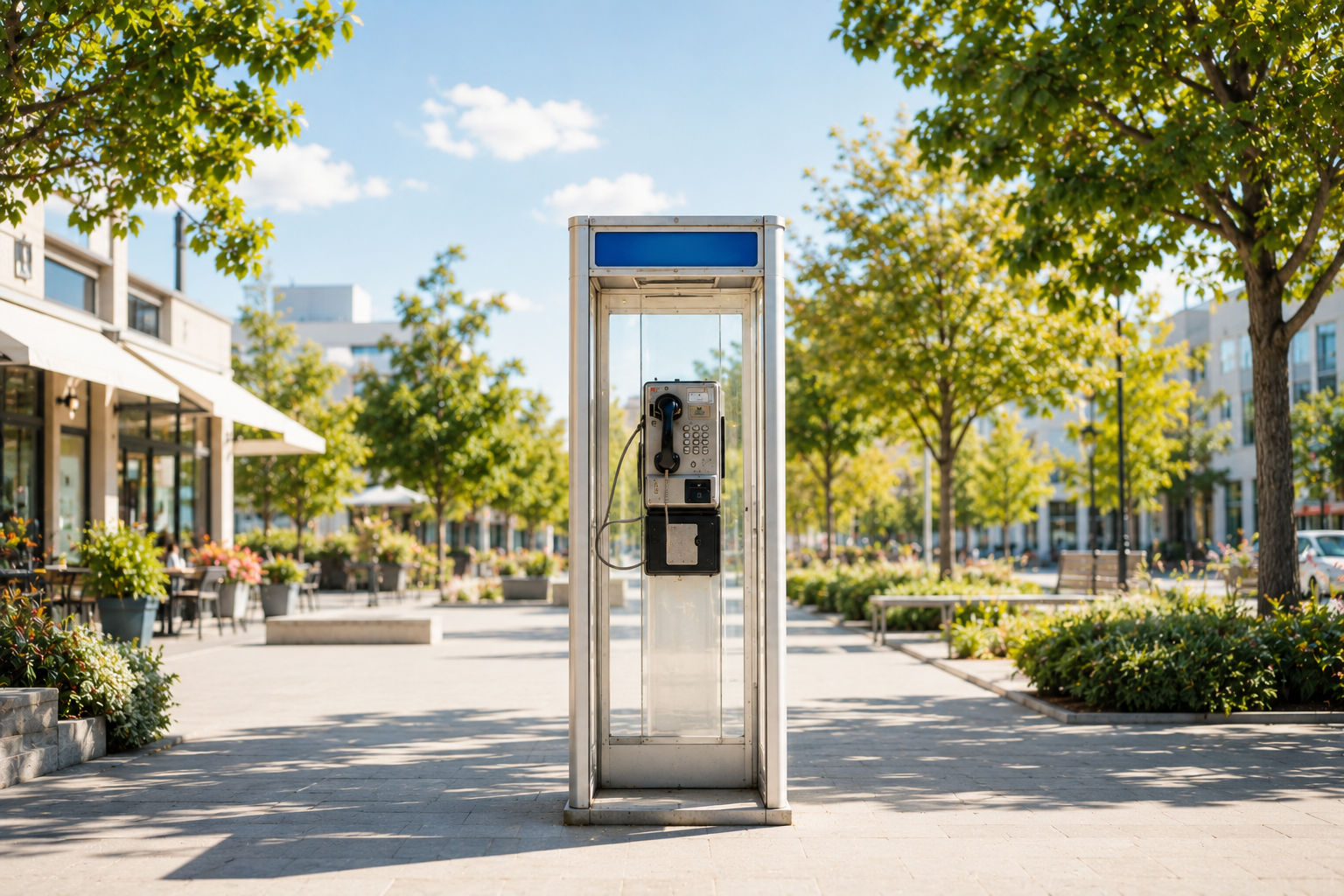
There used to be a corner where everyone knew to meet, a payphone where plans got made on the fly — and it disappeared without anyone marking the occasion. Paul DeGroot, Jessica Lee, and Matt Gomez examine what got lost when payphones vanished, and whether smartphones ever really replaced what they offered.
What happens when public spaces that once facilitated spontaneous human connections fade from our urban landscape? With the decline of payphones, a unique cultural meeting point has vanished, leaving many to wonder where social planning now takes place.
Context
The decline of payphones over the past two decades coincides with the rapid rise of mobile devices, transforming the way people interact. As technology proliferates, urban sociologists and cultural analysts question the implications of losing these communal touchstones.
Perspective: Urban Sociologist
According to Paul M. DeGroot, an urban sociologist and expert in public spaces, payphones represented more than just a means of communication — they served as informal social hubs. "In neighborhoods, payphones provided a backdrop for young people to gather, make plans, and establish networks," he explains. DeGroot points out that the decline of these public fixtures coincided with reduced public space usage, particularly among younger demographics.
"Today, with apps and mobile technology replacing the need for physical communication points, we are losing those moments where unplanned interactions could occur. Every informal meeting, every chance encounter holds significance in urban life; we're diminishing that potential."
He emphasizes that the physicality of a payphone allowed for a moment of pause and reflection in a busy urban environment, acting as a social buffer amid the chaos. The removal of this element leaves a gap that modern technology may not sufficiently fill.
Perspective: Tech Culture Analyst
Jessica Lee, a tech culture analyst, offers a counterpoint; she argues that while payphones may have once served a utility, their replacement has actually streamlined communication and fostered connections in different, often more efficient ways. "The smartphone offers a wealth of communication options that payphones simply couldn't provide. Now communication is instant and can happen anywhere, not just at a designated spot."
However, Lee acknowledges the nuances of social interaction lost in this transition. "There's a certain serendipity associated with spontaneous social interactions that technology often disrupts. Yet, I argue that digital spaces allow for virtual meetups — they aren't perfect, but they can serve similar purposes in the social fabric." Lee cites that platforms like Discord or even social media have absorbed some functions once held by payphones.
Perspective: Public Space Advocate
Matt Gomez, a public space advocate, sees the disappearance of payphones as a significant loss. "With their removal, we've not only lost places where plans were made but also decreased the number of sites dedicated to unstructured interactions." Gomez points out that public spaces serve to strengthen community ties and cherishes the moments when residents could spontaneously meet, discuss, and engage with one another.
Gomez raises concern about the commercialization of urban spaces. "In their place, we often find advertisements or tech-driven installations that don't encourage social interaction like payphones once did. Instead of fostering a sense of community, we are left with sterile environments."
Editorial Synthesis
Where Experts Agree
The removal of payphones has diminished spontaneous social interactions among urban dwellers. Public spaces must evolve to meet current community needs, regardless of technological advancements. Technology has transformed communication, but it cannot wholly replicate the serendipitous nature of in-person encounters.
Where Experts Disagree
DeGroot believes that the loss of payphones has resulted in decreased public space usage, while Lee argues that digital platforms have somewhat compensated for the lack of physical interaction points. Gomez emphasizes that public interactions must prioritize actual engagement, whereas Lee sees potential in integrating virtual connections into the urban fabric.
Why This Matters
The conversation around the disappearance of payphones highlights crucial dynamics in urban interaction and the role of technology in our lives. As connections grow increasingly digital, it becomes imperative to consider how society can recreate the spontaneous interactions that once thrived in public spaces.
Urban planners and community advocates must collaborate to ensure that future designs integrate both tech-driven solutions and dedicated spaces for human interaction — reminding us that social connection is just as vital as technological convenience. Ultimately, the loss of payphones serves as a cautionary tale: the tools we lose today will define the texture of our social fabric tomorrow.
Freeing Connections in a Digital Age
The decline of payphones marks not just the end of a physical communication tool, but a significant shift in how communities interact. While urban sociologists highlight the loss of spontaneous social hubs, tech culture analysts argue that digital platforms offer new avenues for connection. Yet, as we adapt, we must be cautious about the diminishing role of physical spaces that encourage face-to-face interactions. Replacing payphones with mobile technology doesn't inherently solve the need for communal gathering spots; it merely transforms how we communicate. It’s essential to carve out new public spaces that foster those unplanned connections, ensuring the essence of community remains intact in our increasingly digital lives.

Jessica Lee
Tech Culture Analyst
"While payphones served as meeting spots, their decline has been replaced by more efficient ways of coordinating plans through smartphones. Digital communication enhances connectivity and allows for instant interaction without physical limitations."
𝕏 Jessica Lee in Jessica Lee
Matt Gomez
Public Space Advocate
"The decline of payphones has changed how we gather, but it also opens the door for new types of public spaces. Balancing the nostalgic value of payphones with innovative communal areas can foster social interaction in modern cities."
𝕏 Matt Gomez in Matt GomezHow Does This Hit You?


No comments yet. Be the first to weigh in.