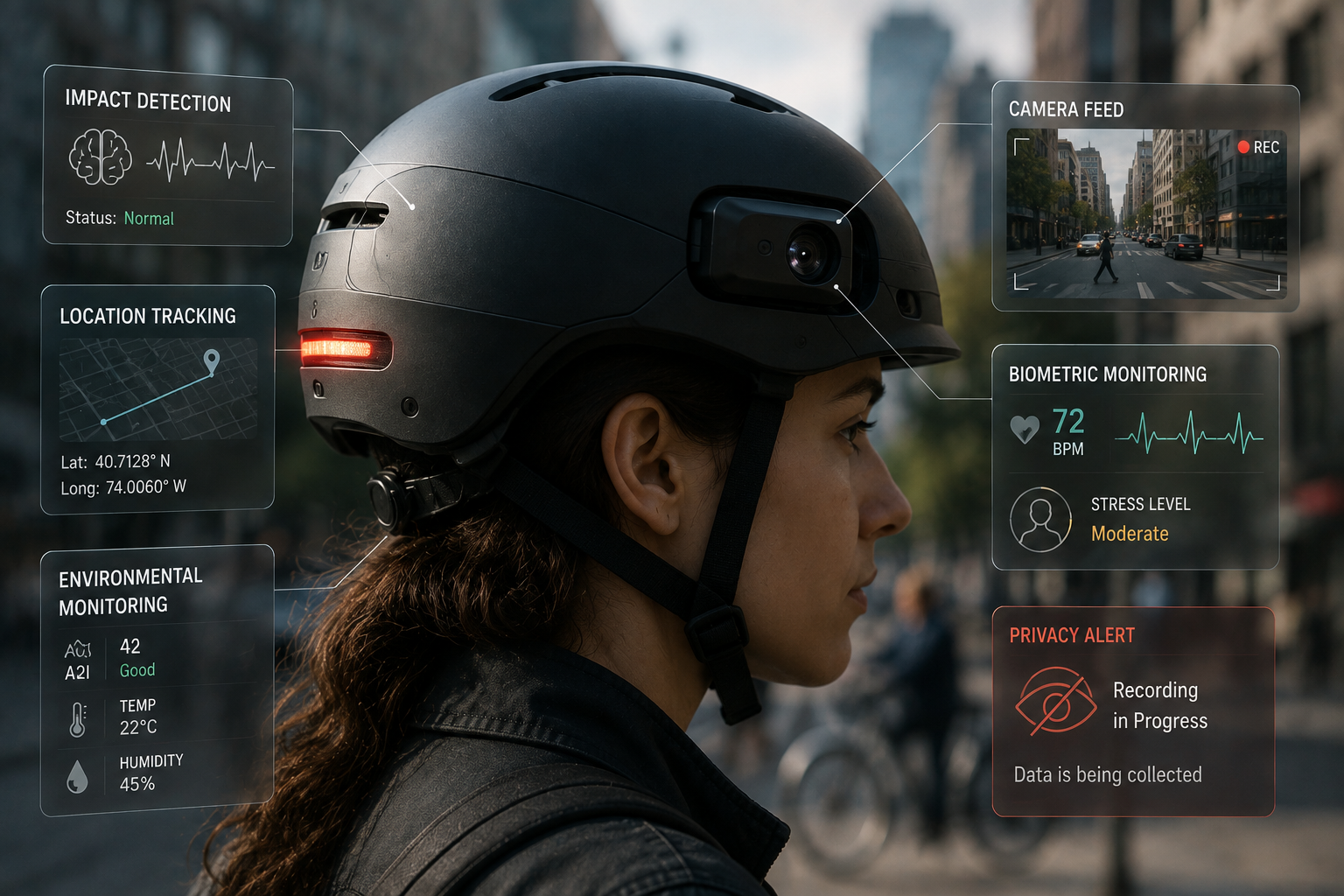
Smart helmets promise to make contact sports safer by detecting dangerous impacts in real time, but they also introduce difficult questions about privacy, consent, and data ownership. While advocates see them as a breakthrough in concussion prevention, critics argue they risk turning protective equipment into continuous surveillance. The challenge isn't choosing between safety and privacy—it's ensuring athletes receive both.
Opening Question
Are smart helmets making sports safer—or turning athletes into constantly monitored data sources?
As wearable technology becomes more sophisticated, helmets are no longer limited to protecting athletes from impact. Many now include sensors capable of measuring collision forces, identifying potential concussion risks, and instantly transmitting data to coaches, trainers, and medical staff.
The technology offers obvious safety benefits, but it also raises an important question: when protective equipment starts collecting and sharing personal data, where should the line be drawn?
Why This Matters Now
Concern over concussions and long-term brain injuries has never been greater.
The Centers for Disease Control and Prevention (CDC) estimates that between 1.6 and 3.8 million sports- and recreation-related concussions occur annually in the United States, highlighting the need for earlier detection and better player protection.
In response, manufacturers have developed smart helmets that monitor impact forces in real time, helping medical personnel identify athletes who may require further evaluation—even when symptoms are not immediately visible.
While this technology could reduce missed concussions and improve player safety, it also raises questions about data privacy, informed consent, and who ultimately controls the information collected.
Expert Perspectives
Dr. Paul Atkinson: Technology Can Save Lives
Neurologist Dr. Paul Atkinson views smart helmets as a significant advancement in concussion prevention.
He argues that real-time impact monitoring gives coaches and medical professionals objective information that can support faster decisions about removing athletes from play and conducting medical evaluations.
Rather than replacing clinical judgment, Atkinson sees helmet data as an additional safety tool capable of reducing the risk of repeated head injuries and their long-term consequences.
As concern grows over chronic traumatic encephalopathy (CTE) and other neurological conditions associated with repeated impacts, he believes technologies that improve early detection deserve serious consideration.
Tina Morgan: Safety Shouldn't Eliminate Consent
Athlete rights advocate Tina Morgan believes the technology introduces ethical concerns that extend beyond player safety.
She argues that many athletes may not fully understand how much information is being collected, who has access to it, or how long it will be stored.
According to Morgan, monitoring should never occur without informed consent and clearly communicated data policies.
While she supports innovations that improve athlete safety, she cautions that protective equipment should not quietly become a surveillance system that limits individual autonomy.
Dr. Andrew Goldman: Data Is Powerful—but Not Infallible
Sports scientist Dr. Andrew Goldman focuses on the broader implications of the information generated by smart helmets.
Beyond injury prevention, he notes that impact data can help coaches better understand training loads, technique, and player performance.
However, Goldman warns against allowing technology to replace human judgment.
Sensors provide valuable information, but they cannot diagnose concussions on their own or fully capture an athlete's physical condition.
He advocates using smart helmets as decision-support tools rather than treating them as definitive medical authorities.
Editorial Synthesis
Where Experts Agree
Despite their differing perspectives, the experts agree on several key points.
They agree that:
- Smart helmets have the potential to improve athlete safety.
- Impact data can assist coaches and medical professionals in making better decisions.
- Technology should complement—not replace—medical evaluation.
- Clear policies regarding data use are increasingly important.
Where Experts Disagree
The primary disagreement concerns how athlete data should be collected and managed.
Atkinson believes continuous monitoring is justified because of its potential to reduce serious brain injuries.
Morgan argues that safety benefits should never come at the expense of informed consent and personal privacy.
Goldman occupies a middle ground, supporting the technology while emphasizing that data should inform decisions rather than dictate them.
Questions Worth Asking
Before adopting smart helmet technology, organizations should consider:
- Who owns the data collected by the helmet?
- Who is allowed to access that information?
- How long is the data stored?
- Can athletes opt out of certain forms of monitoring?
- How should helmet data be combined with medical evaluations rather than replace them?
Answering these questions is essential for balancing innovation with athlete rights.
Why This Matters
Smart helmets represent both the promise and the challenge of modern sports technology.
Their ability to identify dangerous impacts could improve concussion management, reduce preventable injuries, and provide coaches with information that was previously unavailable. At the same time, collecting continuous performance and health data introduces legitimate concerns about privacy, consent, and the growing role of surveillance in athletics.
The future of smart helmets should not be framed as a choice between safety and personal freedom. With transparent policies, informed consent, strong data protections, and appropriate medical oversight, sports organizations can benefit from technological advances while respecting athletes' rights.
Ultimately, the smartest helmet may not be the one that collects the most data—it may be the one that protects both an athlete's health and their autonomy.
Balancing Safety and Surveillance in Smart Helmets
The introduction of smart helmets represents a pivotal advancement in athlete safety, particularly concerning concussion prevention. As highlighted by Dr. Atkinson, real-time monitoring of impacts can empower coaches and medical staff to make informed decisions that prioritize the health of players. However, this technology also initiates a deeper conversation about privacy and the autonomy of athletes, who may find themselves under constant scrutiny without consent. While the benefits of early detection of concussions may ultimately outweigh the invasive aspects of monitoring, it is essential that structures are put in place to ensure athlete awareness and consent regarding their data. A balanced approach that prioritizes both safety and individual rights is crucial as we navigate the future of sports technology.

Dr. Paul Atkinson
Neurologist, Concussion Expert
"Smart helmets can provide crucial data to help prevent further injury, enabling coaches to make informed decisions about player well-being. The benefit of real-time monitoring in potentially life-saving situations outweighs concerns about privacy."
in Dr. Paul Atkinson
Tina Morgan
Athlete Rights Advocate
"Athletes must have autonomy over their own data and physicality. Monitoring technology without their explicit consent can lead to a culture of surveillance, undermining trust and personal agency in sport."
in Tina MorganHow Does This Hit You?



No comments yet. Be the first to weigh in.