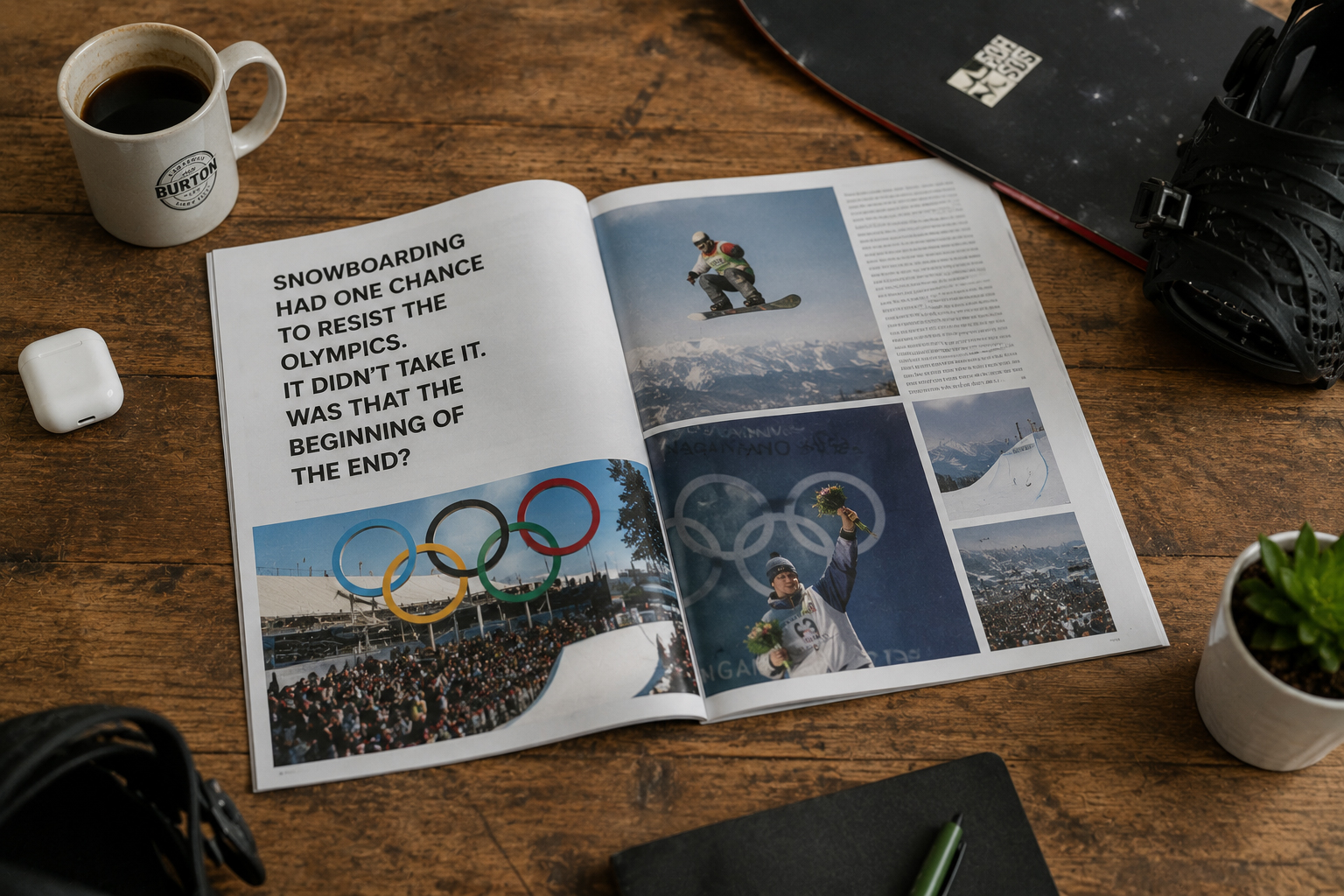
Snowboarding was born as an act of rebellion against everything the traditional sports establishment represented — then it joined the Olympics anyway. Jennifer McCaffrey, Luke Johnson, and Sarah Thompson debate whether that decision unlocked a golden era for the sport or set it on a slow drift away from everything that made it matter.
As snowboarding has evolved into a mainstream sport, one critical question begs to be asked: Did the decision to embrace the Winter Olympics mark a turning point that compromised the sport's authenticity?
Context
The Winter Olympics have become a stage where sports can gain vast international exposure, yet this comes at a potential cost. Snowboarding, often seen as a rebellion against traditional winter sports, had the chance to resist Olympic inclusion in its formative years. Today, the community is divided — some celebrate the global platform, while others worry it's leading to the sport's commercialization and a drift from its core philosophies.
Perspective: Pro-Olympics
Jennifer McCaffrey, Sports Consultant, argues that integrating snowboarding into the Olympics was a strategic decision that opened the doors for financial sponsorship and growth. "Without the Olympics, the sport could have remained a niche activity," she asserts, emphasizing that the visibility of the Winter Games has brought a wave of investment, helping snowboarding evolve into a lucrative profession.
"Snowboarding athletes now have access to unprecedented training and facilities, thanks to Olympic funding," she adds. The sport's growth has led to more youth involvement, fostering new talent that enriches the snowboarding community. Through the Olympics, snowboarding has successfully carved out its place in the world of sports without losing its essential charm.
Perspective: Anti-Olympics
Luke Johnson, Professional Snowboarder, takes the opposing view, suggesting that while financial growth is appealing, it transforms the sport into something it was never meant to be. He discusses how the Olympic pressure can lead to an emphasis on performance over the thrill of riding. "Snowboarding is about freedom and self-expression," he details, arguing that the Olympic structure stifles individuality.
Johnson feels that the Olympics commodify the sport, aligning it with corporate interests rather than the organic culture that birthed it. He recalls his days as a competitor, where the joy was in riding with friends and exploring new terrains — contrasting sharply with the feeling of being just another athlete in a high-stakes competition.
Perspective: The Journalist's Viewpoint
Sarah Thompson, Sports Journalist, offers a more nuanced understanding. "Snowboarding's integration into the Olympics has created a significant cultural shift," she notes. While she acknowledges concerns about commercialization, she emphasizes that the platform has allowed the sport to reach heights it otherwise could not have achieved.
"Many snowboarding stars now serve as role models and advocates, thanks to increased visibility," she states. However, she is wary of the ongoing tension between cultural authenticity and commercial pressures, noting that the divergence may lead to a future struggle for identity within the sport.
Editorial Synthesis
Where Experts Agree
The Olympics offer significant financial incentives and exposure for snowboard athletes. The growth of the sport has brought forth much-needed attention and investment. There is an ongoing tension between the sport's grassroots culture and the market-driven approaches imposed by Olympic inclusion.
Where Experts Disagree
Whether the financial benefits outweigh the risks of losing snowboarding's cultural essence is contested. The long-term impact of Olympic inclusion on future generations of snowboarders also remains debated. Experts differ on whether increased visibility results in positive change or negative commercialization within the sport's community.
Why This Matters
McCaffrey emphasizes financial growth as a driving force — an attractive case for many. Yet, Johnson warns against losing the sport's soul to corporate interests, advocating for a return to its roots. Thompson unveils a middle ground, stressing an evolution that can retain cultural integrity while redefining what it means to participate in snowboarding today.
The decisions made in the present will echo across future generations. Each turn down the slope carries the weight of history — whether snowboarding can forge a new path or finds itself relegated to the margins remains to be seen.
The Olympic Paradox: An Opportunity Lost?
The debate surrounding snowboarding's place in the Olympics illustrates a profound irony: while the sport has gained unprecedented visibility and financial backing, this evolution may have come at the cost of its original spirit. Enthusiasts like Jennifer McCaffrey highlight the positive aspects of Olympic inclusion, such as increased access to resources and youth engagement. However, Luke Johnson's critiques serve as a powerful reminder that commercialization can erode the core values of authenticity and rebellion that defined snowboarding's early identity. Ultimately, as the sport navigates its Olympic journey, it must strike a delicate balance between growth and preserving its essence. The question remains: has the price of success outweighed its initial allure, or can snowboarding manage to stay true to itself in this new chapter?

Jennifer McCaffrey
Sports Consultant
"McCaffrey argues that embracing the Olympics provided snowboarding with necessary visibility and financial support, helping to legitimize the sport on an international platform. She believes that rejecting the opportunity might have stunted its growth and appeal to mainstream audiences."
𝕏 Jennifer McCaffrey in Jennifer McCaffrey
Luke Johnson
Professional Snowboarder
"Johnson takes a strong stance against snowboarding's inclusion in the Olympics, arguing that it compromises the sport’s authenticity and underground culture. He feels that the pressure to conform to Olympic standards detracts from the true spirit of snowboarding, which thrives on freedom and self-expression."
𝕏 Luke Johnson in Luke Johnson
Sarah Thompson
Sports Journalist
"Thompson offers a balanced view, suggesting that while the Olympics can elevate a sport's profile, it can also alienate core fans and athletes. She emphasizes the importance of preserving the unique identity of snowboarding while also exploring the benefits and detriments of Olympic participation."
𝕏 Sarah Thompson in Sarah ThompsonHow Does This Hit You?



No comments yet. Be the first to weigh in.