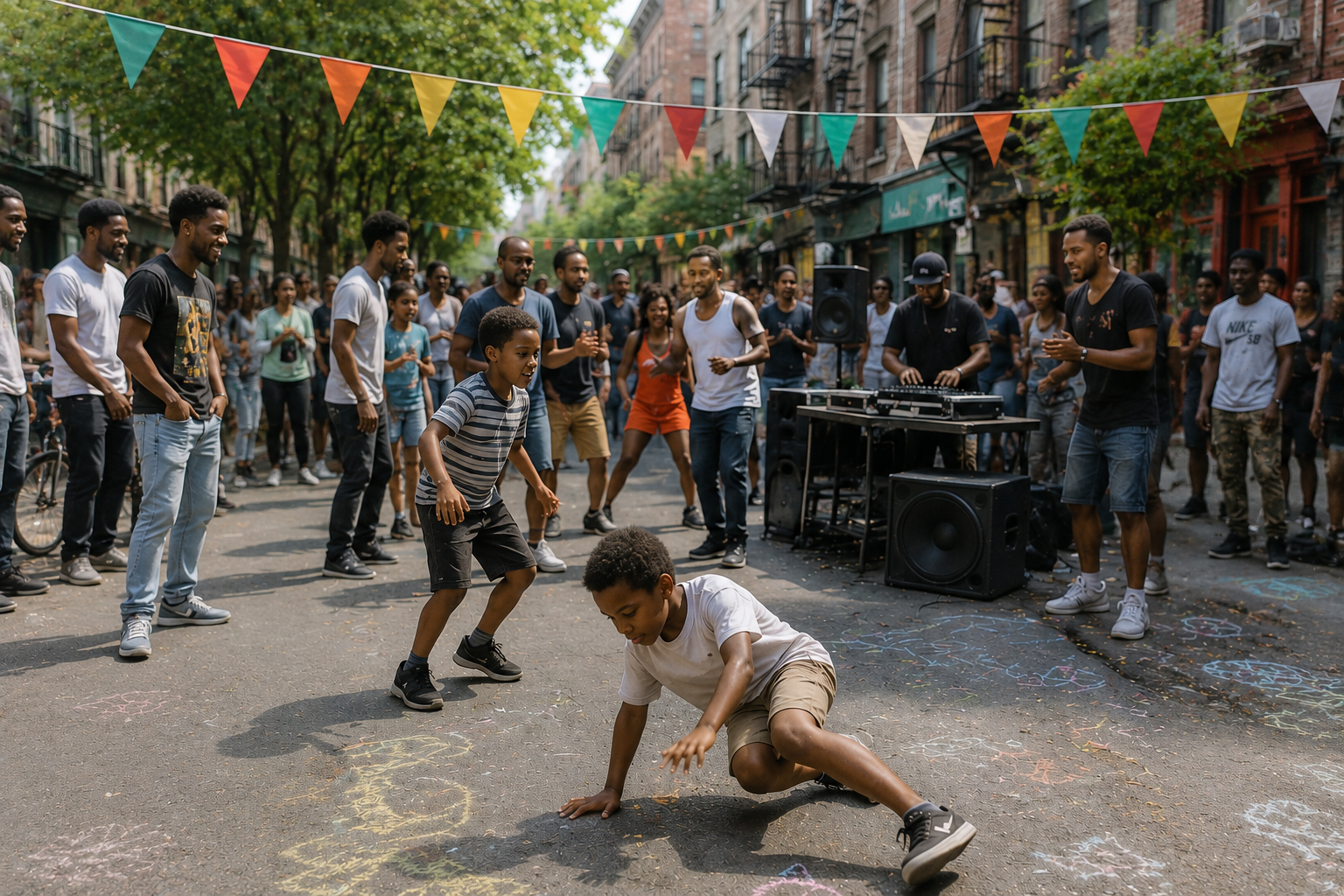
Block parties were once spontaneous expressions of neighborhood identity—organized by residents, powered by community, and free from bureaucracy. Today, many require permits, insurance, sponsors, and approval from multiple authorities. Supporters argue that regulations improve safety and accountability, while critics believe they have transformed grassroots gatherings into heavily managed events that favor well-resourced communities. As cities grapple with growth, liability concerns, and changing demographics, the debate raises a deeper question about who controls public space and community culture. Are modern regulations protecting neighborhoods, or are they quietly eroding the local traditions that once brought people together?
In an era where neighborhood block parties often require approval from multiple authorities, one question stands out:
Who took the spontaneity out of community gatherings?
What was once a simple and organic way to celebrate local culture has increasingly become a process governed by permits, sponsors, liability requirements, and administrative oversight.
The evolution of the block party raises larger questions about power, public space, community ownership, and cultural expression.
Why This Matters Now
The need for permits and sponsorship has grown significantly in many cities over recent years.
Local governments cite concerns such as:
- Public safety
- Liability management
- Traffic control
- Resource allocation
Yet these changes also reflect broader trends shaping urban life.
Gentrification, privatization, and the commercialization of public spaces have fundamentally altered how communities gather and celebrate.
As cities evolve, residents are increasingly forced to navigate formal systems simply to organize events that were once neighborhood traditions.
Expert Perspectives
Robin McHugh (Urban Sociologist)
Robin McHugh argues that permits fundamentally change the nature of community gatherings.
"The block party was once an informal way for neighbors to connect, to activate under-utilized public spaces, and to celebrate diversity and culture without the constraints of bureaucracy."
According to McHugh, today's permit requirements represent more than administrative procedures.
They signal a broader shift away from grassroots community power.
"This shift speaks to a loss of grassroots agency and community empowerment."
McHugh warns that the costs and complexity involved in securing approvals can disproportionately impact lower-income neighborhoods.
Communities with fewer resources often face the greatest obstacles to organizing public celebrations.
He argues that excessive regulation risks prioritizing order and compliance over local identity and cultural vibrancy.
Isaiah Lee (Community Organizer)
Community organizer Isaiah Lee approaches the issue from a practical perspective.
He acknowledges that some degree of regulation is necessary.
However, he believes many current requirements create unnecessary barriers.
"The requirement for sponsors or permits can turn a joyful event into a project that feels more like a corporate showcase than a community gathering."
For Lee, one of the biggest concerns is the sense of powerlessness many organizers experience when navigating city bureaucracy.
Residents who simply want to celebrate their neighborhood often find themselves facing paperwork, fees, and legal concerns.
"When residents have to think about liability and paperwork, it can stifle creativity and the genuine connections that block parties were supposed to foster."
Lee advocates for policies that prioritize community participation rather than administrative control.
Dr. Susan Yates (Cultural Anthropologist)
Dr. Susan Yates examines block parties through a broader cultural and historical lens.
She sees these gatherings as more than social events.
They are spaces where communities express identity, share traditions, and strengthen social bonds.
"Block parties have been a site of cultural exchange and community identity, serving as a canvas for artistic expression, culinary cultural fusion, and social engagement."
Yates argues that requiring permits and sponsorships can unintentionally transform community celebrations into commercial products.
What was once owned by residents becomes increasingly influenced by institutions and market forces.
According to Yates, this trend mirrors a wider movement toward the privatization of public space.
"When community events are perceived through a commercial lens, they lose their essence."
Rather than celebrating local ownership, gatherings risk becoming managed experiences designed around compliance, branding, and visibility.
Editorial Synthesis
Where Experts Agree
Despite approaching the issue from different disciplines, the experts share several concerns:
- Permit requirements can weaken the grassroots nature of block parties.
- Regulatory burdens often fall hardest on lower-income and marginalized communities.
- The transformation of block parties reflects larger social and economic trends.
- Community gatherings play a critical role in building social cohesion and local identity.
Where Experts Disagree
How Much Regulation Is Necessary?
McHugh and Lee emphasize the burdens imposed by excessive bureaucracy.
Yates acknowledges those concerns while also recognizing that some organizational structure may help address safety and logistical challenges.
Commercialization: Opportunity or Threat?
Some view sponsorships as a practical source of funding.
Others see corporate involvement as evidence that community traditions are becoming commodified.
The Future of Public Space
The experts differ on whether today's regulations represent responsible governance or a gradual transfer of power away from residents and toward institutions.
Why This Matters
The debate surrounding block parties is ultimately about more than permits.
It is about who controls public space and who gets to shape community culture.
When organizing a neighborhood gathering becomes increasingly difficult, the consequences extend beyond paperwork.
Communities may lose opportunities to:
- Build social connections
- Celebrate local traditions
- Strengthen neighborhood identity
- Foster civic engagement
The disappearance of informal public gatherings can weaken the social fabric that makes cities feel human.
As urban areas continue to evolve, policymakers face a difficult challenge:
How do you protect public safety without regulating away community life itself?
The future of the block party may depend on finding that balance.
Because at its core, this conversation is not about permits or sponsorships.
It's about whether residents still have the power to claim a piece of their neighborhood, gather with one another, and celebrate who they are without needing permission first.
The fight over block parties is ultimately a fight over belonging, ownership, and the right to create community in public space.
Restoring the Spirit of Community
The transformation of block parties from spontaneous celebrations to events tethered by permits and sponsorship not only stifles community spirit but also highlights profound inequities in urban governance. While safety and organization are valid concerns, the increasing bureaucracy can alienate those who once thrived on grassroots participation, especially marginalized communities. It begs the question of how we can reclaim that essential joy and connection in our neighborhoods without losing the essence of what these gatherings represent. To restore the block party's original intent, local governments must seek to balance regulation with the need for accessibility, fostering an environment where spontaneity and community expression flourish once again. Ultimately, it is about retaining the autonomy and identity of neighborhoods in the face of growing urban challenges.
Robin McHugh
Urban Sociologist
"McHugh argues that the increasing regulation of block parties is crucial for ensuring safety and inclusivity. She believes that proper permits and sponsorship can enhance community engagement and support local businesses."
in Robin McHugh
Isaiah Lee
Community Organizer
"Lee contends that the need for permits and sponsors stifles grassroots community gatherings and limits access to public spaces. He argues that such regulations disproportionately affect marginalized communities seeking to celebrate and connect."
𝕏 Isaiah Lee in Isaiah LeeDr. Susan Yates
Cultural Anthropologist
"Yates believes that while regulations can help manage public safety, they must not alienate communities from their traditions. She advocates for a balanced approach where community interests are prioritized alongside safety concerns."
in Dr. Susan YatesHow Does This Hit You?


No comments yet. Be the first to weigh in.