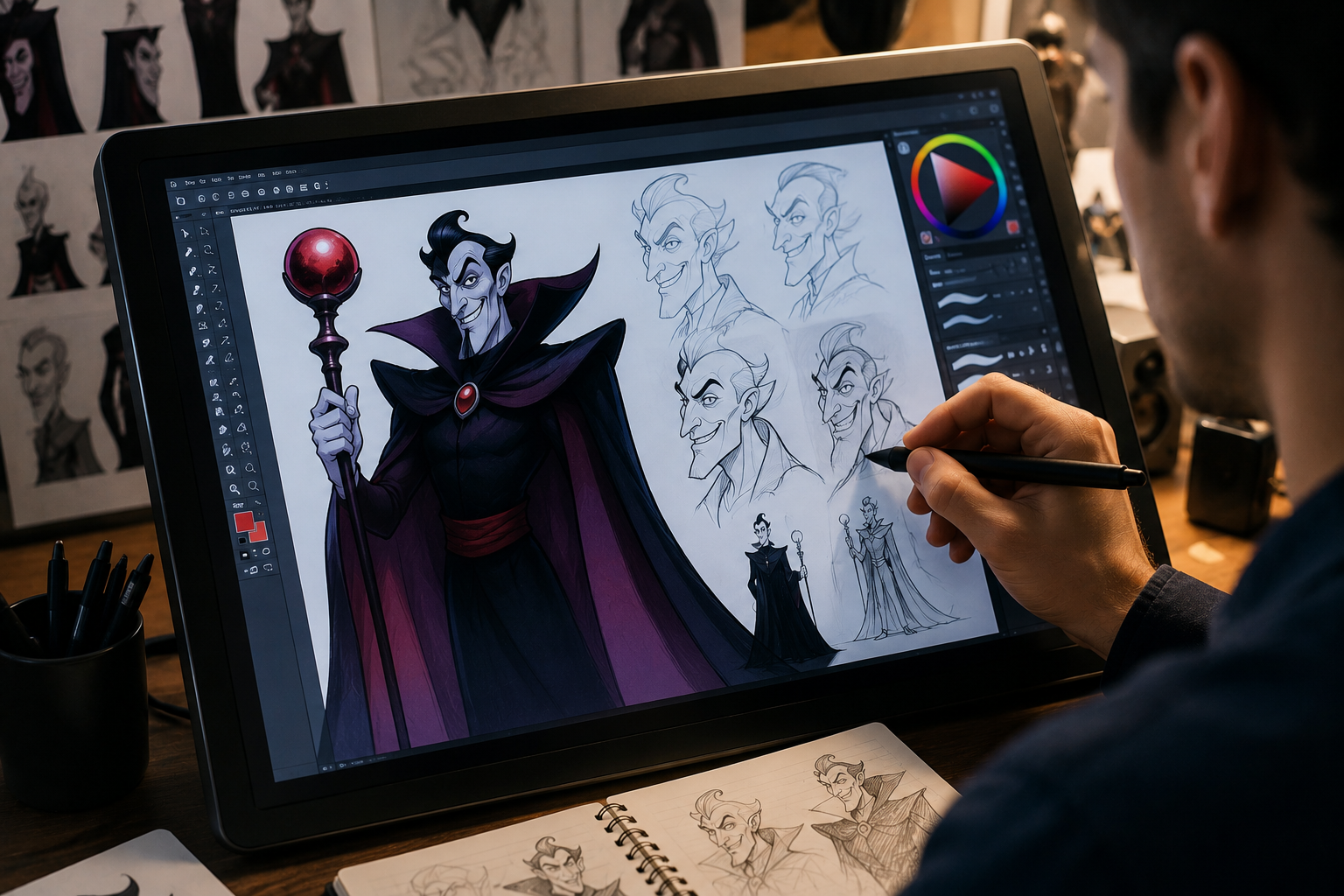
Cartoon villains have evolved from simple symbols of evil into complex characters shaped by motives, trauma, and moral ambiguity. While this shift has created richer storytelling and more relatable antagonists, it has also sparked debate over whether modern narratives sacrifice moral clarity in the process. The question is no longer whether villains are evil—but whether understanding them changes how we define evil itself.
Opening Question
Have modern stories made villains too relatable?
Classic cartoon villains were easy to recognize. Whether it was an evil witch, a greedy industrialist, or a mustache-twirling mastermind, audiences rarely questioned who the antagonist was—or why they needed to be stopped.
Today's villains look very different. Rather than representing pure evil, many are driven by trauma, ideology, loss, or personal conviction. As storytelling has become more psychologically complex, the line between hero and villain has become increasingly blurred.
The question is whether this evolution has enriched storytelling—or weakened one of its oldest narrative tools.
Why This Matters Now
Modern audiences increasingly expect layered characters whose actions reflect the complexities of real life rather than simple moral binaries.
Films, television series, animation, and video games now regularly present antagonists whose motivations are understandable—even sympathetic. This reflects a broader cultural shift toward exploring psychology, systemic influences, and ethical gray areas.
While these stories encourage empathy and deeper engagement, they also raise questions about whether moral ambiguity sometimes comes at the expense of moral clarity.
Expert Perspectives
Neil Gaiman: Complexity Makes Better Stories
Author Neil Gaiman believes multidimensional villains create richer narratives because they reflect the complexities of human nature.
Rather than presenting evil as something abstract, complex antagonists force audiences to consider how ordinary people can make destructive choices.
According to Gaiman, giving villains believable motivations transforms conflicts from simple battles between good and evil into explorations of fear, identity, power, and morality.
He acknowledges, however, that greater complexity can sometimes make a story's ethical message less straightforward than classic tales with clearly defined heroes and villains.
Chuck Klosterman: Villains Reflect Modern Culture
Cultural critic Chuck Klosterman argues that today's villains mirror a society that increasingly questions institutions, authority, and traditional ideas of right and wrong.
As audiences become more skeptical of simple narratives, stories naturally evolve toward characters whose motivations are open to interpretation.
However, Klosterman warns that if every villain becomes understandable, audiences may lose the ability to clearly identify genuinely destructive behavior.
In his view, stories still benefit from characters who represent unmistakable moral boundaries.
Laura Miller: Simplicity Still Has Value
Literary critic Laura Miller believes modern storytelling sometimes overcorrects by making every antagonist sympathetic.
She argues that classic cartoon villains served an important narrative purpose: they allowed audiences to confront fear, injustice, and danger without moral confusion.
For Miller, uncomplicated villains provide emotional clarity, especially in stories designed for younger audiences or pure entertainment.
While she appreciates nuanced characterization, she cautions that excessive complexity can unintentionally minimize the consequences of harmful actions by encouraging audiences to focus more on explanation than accountability.
Editorial Synthesis
Where Experts Agree
Despite their different perspectives, the experts agree on several important ideas.
They agree that:
- Complex villains often create deeper and more engaging stories.
- Modern storytelling increasingly reflects the moral complexity of contemporary society.
- The portrayal of villains influences how audiences think about ethics, responsibility, and justice.
- Balancing empathy with accountability remains an important challenge for writers.
Where Experts Disagree
The main disagreement concerns how much complexity is beneficial.
Gaiman views psychologically rich villains as an evolution that strengthens storytelling.
Klosterman supports greater complexity but believes stories still need characters who embody clear moral limits.
Miller argues that straightforward villains continue to serve an important purpose by preserving moral clarity and emotional catharsis.
Questions Worth Asking
When evaluating a modern villain, consider asking:
- Does understanding a villain's motivation excuse their actions?
- Can empathy coexist with accountability?
- Does moral ambiguity strengthen the story or make its message less clear?
- Are some stories better served by simple villains than psychologically complex ones?
- What does a story gain—or lose—when evil becomes relatable?
These questions reveal why the role of villains continues to evolve alongside the audiences who watch them.
Why This Matters
The evolution of cartoon villains reflects more than changing entertainment preferences—it mirrors changing ideas about human nature itself.
Simple villains offered certainty. They represented evil that could be identified, confronted, and defeated. Modern antagonists invite audiences to examine the circumstances, beliefs, and choices that shape harmful behavior, often leaving fewer easy answers.
Neither approach is inherently superior. Clear-cut villains provide memorable conflict and moral clarity, while complex antagonists encourage empathy and deeper reflection. The strongest stories often recognize that both have a place.
Ultimately, the future of villainy may not lie in choosing between simplicity and complexity, but in knowing which serves the story best. Great villains don't simply oppose the hero—they challenge the audience's understanding of justice, responsibility, and what it truly means to be human.
The Nuance of Evil: A Double-Edged Sword
The transformation of the cartoon villain from a one-dimensional embodiment of evil to a complex character reflects society's evolving understanding of morality. While this complexity allows for richer storytelling and deeper exploration of the human experience, it comes with its own challenges. As Neil Gaiman points out, the ambiguity in modern villains can muddy moral clarity, potentially leaving audiences torn between empathy and outrage. We must ask ourselves: have we lost the primal thrill of good versus evil? This evolution caters to a sophisticated narrative landscape but risks diluting the straightforward entertainment value that traditional villains provided. Ultimately, striking a balance between depth and clarity may be the key to maintaining the impact of villainy in storytelling today.
Neil Gaiman
Author and Screenwriter
"Gaiman argues that modern storytelling's move towards complex villains allows a deeper exploration of moral ambiguity, reflecting real human experiences and struggles. He believes that these layered characters foster empathy and provoke thought about the nature of good and evil."
𝕏 Neil Gaiman in Neil GaimanChuck Klosterman
Cultural Critic and Author
"Klosterman contends that the shift towards more relatable villains detracts from the clarity and simplicity that classic storytelling provided. He believes a clear dichotomy between good and evil serves as a useful moral compass in narratives, which modern complexities can obscure."
𝕏 Chuck Klosterman in Chuck Klosterman
Laura Miller
Literary Critic
"Miller takes a neutral stance, suggesting that the evolution of villains in storytelling reflects broader societal changes in understanding morality. While she acknowledges the loss of archetypal evil, she also sees the merit in exploring the complexities of villainy, which can lead to richer narratives."
𝕏 Laura Miller in Laura MillerHow Does This Hit You?



No comments yet. Be the first to weigh in.