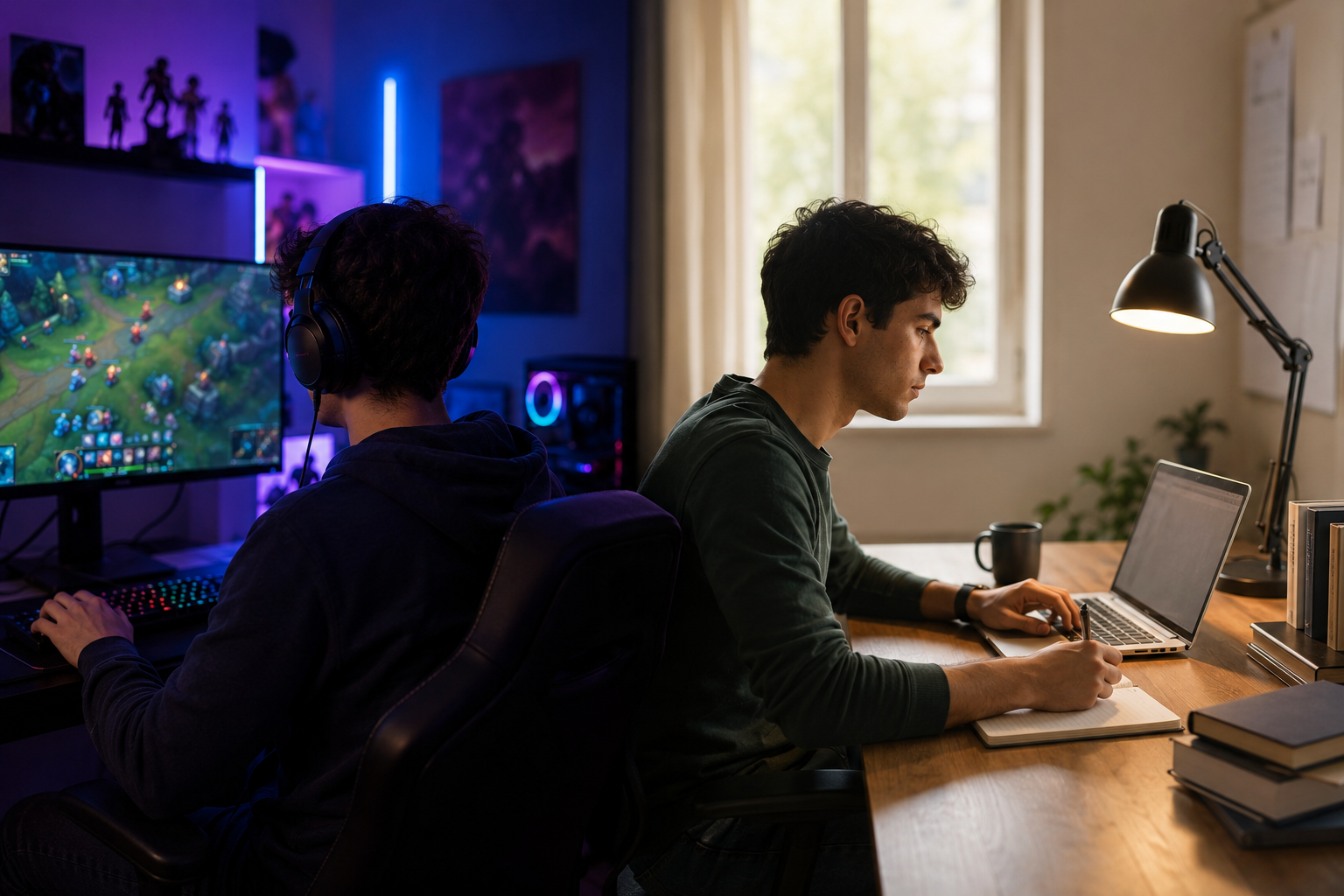
For years, countless young gamers have heard the same refrain from well-meaning parents: "It's just a phase." Yet as esports has grown into a global industry with professional leagues, sponsorships, and career opportunities, many of those assumptions are being challenged. The story of a teenager qualifying for a professional tournament—only to have that achievement dismissed—reflects a broader cultural shift in how society views gaming. Experts agree that gaming can develop valuable skills and open legitimate career paths, but they also caution that success requires balance, discipline, and healthy family communication. The debate is no longer whether gaming can become a profession—it is whether families can recognise its potential while managing its genuine risks.
At fourteen years old, qualifying for a professional gaming tournament feels like proof.
Proof that the hours mattered.
That the practice meant something.
That the dream wasn't imaginary.
For many young players, however, the biggest challenge isn't winning the next match.
It's convincing the people closest to them that the achievement deserves to be taken seriously.
Parents often see gaming through the lens of distraction.
Young players see it as opportunity.
A decade later, those two perspectives can look remarkably different.
As esports has evolved into a billion-pound global industry, many careers that once seemed impossible have become entirely legitimate.
Yet one question continues to divide families:
When does a hobby become a career—and how can parents support ambition without ignoring the very real risks that accompany it?
Why This Matters Now
Gaming is no longer a niche pastime.
Professional esports attracts millions of viewers.
Elite players compete for substantial prize pools.
Careers now extend beyond competition into coaching, broadcasting, content creation, game development, marketing, and event production.
For younger generations, gaming has become both a form of entertainment and a potential profession.
At the same time, parents face understandable concerns.
Questions about education.
Screen time.
Mental health.
Long-term career stability.
Those concerns are legitimate, but so too are the opportunities the industry now provides.
The challenge is no longer deciding whether gaming has professional potential. It is learning how to distinguish healthy ambition from unhealthy obsession.
Expert Perspectives
David Polgar: Gaming Can Build Real-World Skills
Technology ethicist and All Tech Is Human co-founder David Polgar argues that gaming deserves to be recognised as a legitimate pathway for developing valuable skills.
"Gaming is not just a hobby; it's a skill set that, when cultivated, can lead to significant professional opportunities."
Competitive gaming develops abilities that extend well beyond the screen.
These include:
- Strategic thinking.
- Teamwork.
- Communication.
- Adaptability.
- Decision-making under pressure.
Polgar believes parents should evaluate gaming based on outcomes rather than outdated stereotypes.
Supporting a child's passion does not mean abandoning expectations—it means recognising where meaningful opportunities may exist.
The lessons learned through disciplined gaming often translate into valuable professional skills beyond esports itself.
Dr. Anna Lembke: Opportunity Requires Healthy Boundaries
Addiction medicine specialist Dr. Anna Lembke offers a more cautious perspective.
"Parents often fear that gaming might lead to obsessive behavior or isolation."
Those concerns, she argues, should not be dismissed.
Gaming activates powerful reward systems that can encourage excessive play if left unmanaged.
However, Lembke does not advocate rejecting gaming altogether.
Instead, she encourages families to establish healthy routines through:
- Clear time boundaries.
- Open communication.
- Balanced daily activities.
- Ongoing awareness of mental wellbeing.
Supporting a passion and managing its risks are not mutually exclusive—they should happen together.
Kimberly K. Doud: Understanding Builds Stronger Families
Family therapist Kimberly K. Doud focuses on what happens when communication breaks down.
"When parents dismiss a child's passion, it can create feelings of alienation and resentment."
Rather than immediately rejecting gaming as unrealistic, Doud encourages parents to become curious.
Ask questions.
Watch a competition.
Understand why it matters.
These conversations often reveal that the issue extends beyond gaming itself.
Children are seeking recognition.
Parents are seeking reassurance.
The most productive families create space for both.
Support does not require unconditional agreement. It requires genuine understanding.
Editorial Synthesis
Where Experts Agree
Although their priorities differ, the experts identify several common themes:
- Gaming can contribute to valuable personal and professional development.
- Open communication between parents and children is essential.
- Healthy boundaries improve long-term outcomes.
- Gaming should be approached with balance rather than extremes.
Where Experts Disagree
How Great Is the Risk?
David Polgar emphasises gaming's educational and professional potential.
Dr. Lembke places greater emphasis on preventing problematic gaming habits before they develop.
What Should Parents Do?
Kimberly Doud believes understanding should come before judgement.
Polgar encourages active engagement with a child's interests, while Lembke stresses that enthusiasm should be balanced with clear expectations and moderation.
How Should Success Be Measured?
Polgar sees gaming as a legitimate pathway that can produce meaningful careers.
Lembke reminds families that professional success is exceptionally competitive, making education, wellbeing, and life balance equally important measures of achievement.
Why This Matters
The conversation surrounding gaming reflects a broader shift in how society understands ambition.
Every generation has witnessed careers that older generations struggled to recognise.
Professional athletes.
Content creators.
Software developers.
Digital entrepreneurs.
Esports belongs to that continuing evolution.
That does not mean every teenager who dreams of becoming a professional gamer will achieve it.
Few will.
The same is true of almost every highly competitive profession.
What matters is how families respond to those ambitions.
Dismissal can discourage talent before it has the opportunity to develop.
Blind encouragement can ignore important risks.
The healthiest approach lies somewhere between the two.
Children need encouragement to pursue meaningful goals.
Parents need confidence that those goals are being pursued responsibly.
When both happen together, gaming becomes more than entertainment.
It becomes an opportunity to develop discipline, resilience, communication, and purpose—whether the destination is a professional esports career or an entirely different path.
Perhaps the greatest lesson isn't whether gaming becomes a lifelong profession. It's whether families can replace scepticism with conversation, allowing young people to chase ambitious dreams while remaining grounded by guidance, balance, and trust.
Navigating the New Landscape of Gaming Careers
The journey from dismissing a teenager's gaming aspirations to recognizing them as a legitimate career reflects society's evolving understanding of digital engagement. Parents grapple with concerns over addiction and social isolation, while experts like David Polgar advocate for the recognition of gaming as a viable pathway to professional success. As the gaming industry blossoms into a multi-faceted career arena, embracing this potential is crucial. A balanced approach—acknowledging the risks while encouraging growth—can lead to both personal development and professional success. The narrative around gaming must shift from skepticism to support, as we learn to navigate this thrilling and complex landscape together.

David Polgar
Co-Founder, All Tech Is Human
"Gaming can be a legitimate career path for young individuals. As society increasingly recognizes the skills developed through gaming, parents should support their children's aspirations rather than dismiss them as a phase."
in David Polgar
Dr. Anna Lembke
Chief of Addiction Medicine, Stanford University
"While gaming can provide benefits, addiction and negative impacts on mental health are real concerns. It's essential for parents to set boundaries and encourage a balanced lifestyle to protect their children's well-being."
in Dr. Anna Lembke
Kimberly K. Doud
Family Therapist
"Finding a balance between supporting children's passions and ensuring their overall well-being is key. Open communication and understanding the nuances of gaming culture can lead to healthier relationships between parents and children."
in Kimberly K. DoudHow Does This Hit You?
No comments yet. Be the first to weigh in.