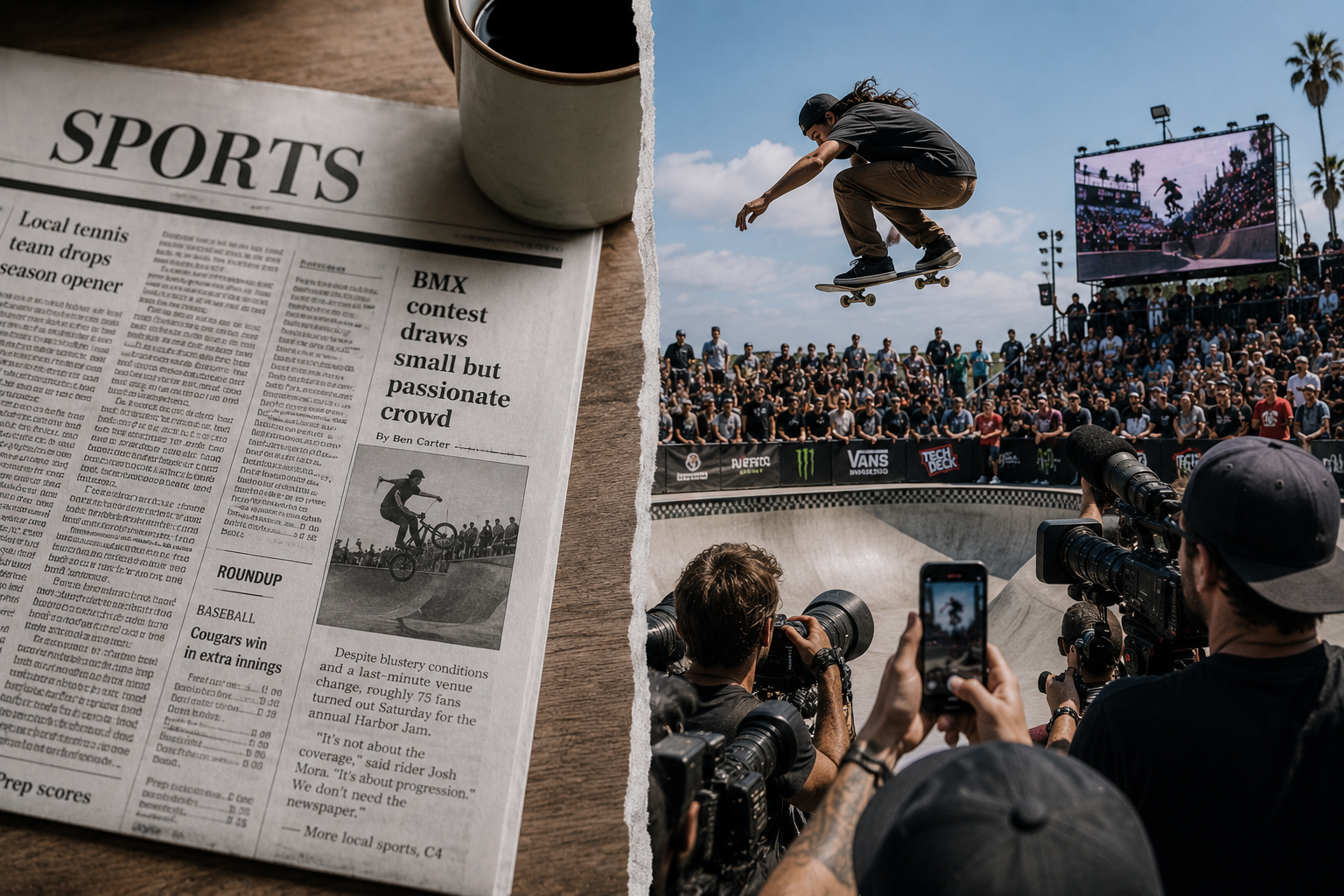
For decades, extreme sports thrived beyond the reach of traditional sports media, cultivating communities built on creativity, individuality, and resistance to convention. Today, mainstream newspapers, broadcasters, and digital platforms routinely feature skateboarders, snowboarders, BMX riders, and freestyle athletes alongside footballers and Olympians. This increased visibility has delivered sponsorships, professional opportunities, and broader public recognition. Yet it has also sparked concerns that institutional acceptance may soften the rebellious culture that gave these sports their identity. The debate is no longer about whether extreme sports deserve mainstream attention—it is about whether greater representation strengthens their authenticity or gradually reshapes them into something more commercially acceptable.
For years, extreme sports existed outside the spotlight.
Skateboarders built their own magazines.
Snowboarders created their own films.
BMX riders shared videos long before social media rewarded viral moments.
They didn't wait for newspaper sports sections to recognise them.
They built their own culture.
Today, the landscape looks very different.
Olympic broadcasts feature skateboarding.
Mainstream newspapers profile freestyle athletes.
Global brands invest millions in sports once dismissed as fringe pursuits.
Visibility has arrived.
But so has a difficult question:
Has mainstream media finally given extreme sports the recognition they deserve—or has it begun reshaping them into something more marketable than authentic?
Why This Matters Now
The boundaries between mainstream and alternative sports have largely disappeared.
Events that once attracted niche audiences now command global television coverage and major sponsorship deals.
For athletes, that shift has created unprecedented opportunities.
Professional careers have become more financially sustainable.
Competitions reach larger audiences.
Young athletes have more role models than ever before.
Yet increased exposure also changes expectations.
Media outlets often simplify complex stories.
Sponsors seek broad appeal.
Audiences reward personalities as much as performances.
The challenge is no longer earning attention—it's ensuring that attention doesn't redefine the culture itself.
Expert Perspectives
Dr. Chris McDougall: Recognition Creates Opportunity
Author and journalist Dr. Chris McDougall believes mainstream coverage has helped elevate extreme sports from the margins into legitimate athletic competition.
"Visibility brings opportunities for sponsorships, better event organization, and larger audiences, which can only enhance the sport."
Greater media attention does more than increase audience numbers.
It also:
- Expands professional opportunities.
- Attracts investment.
- Encourages youth participation.
- Gives athletes long-term career pathways.
McDougall argues that legitimacy matters.
Recognition by established media validates sports that were once overlooked and introduces them to entirely new generations of fans.
Visibility is not simply publicity—it is a pathway to sustainability.
Dr. Melissa A. Schilling: Recognition Can Come at a Cost
Management professor Dr. Melissa A. Schilling warns that mainstream acceptance may subtly alter the culture that made extreme sports distinctive.
"When extreme sports are covered through conventional lenses, there's a danger of commodifying them."
Extreme sports emerged from communities that valued experimentation, independence, and resistance to convention.
Commercial success can create new pressures.
Athletes may feel encouraged to become more marketable.
Competitions become more structured.
Media narratives often favour familiar storylines over the complexities of the culture itself.
Schilling argues that widespread exposure should not come at the expense of originality.
When rebellion becomes a brand, its meaning inevitably changes.
Jonny Moseley: Visibility Is a Double-Edged Sword
Olympic champion and commentator Jonny Moseley occupies a middle ground.
"Visibility is a double-edged sword."
Recognition creates opportunities that previous generations could scarcely imagine.
But it also introduces constant public scrutiny.
Athletes are no longer judged solely by their performances.
They are increasingly evaluated on:
- Public image.
- Marketability.
- Social media presence.
- Commercial appeal.
Moseley believes athletes must carefully balance authenticity with the realities of professional sport.
Exposure creates opportunity—but it also creates expectations that can shape how athletes express themselves.
Editorial Synthesis
Where Experts Agree
Despite their different perspectives, the experts identify several shared conclusions:
- Mainstream media has significantly increased the visibility of extreme sports.
- Greater exposure has created new career and sponsorship opportunities.
- Representation influences how athletes and their sports are perceived.
- Authenticity remains central to the identity of extreme sports.
Where Experts Disagree
Does Mainstream Coverage Strengthen or Dilute the Culture?
McDougall believes wider coverage brings legitimacy and long-term growth.
Schilling argues that commercialisation risks softening the rebellious values that defined these sports.
What Is the Cost of Visibility?
Moseley accepts that recognition brings both benefits and compromises.
Rather than viewing exposure as entirely positive or negative, he sees it as an ongoing negotiation between individuality and public expectation.
Who Shapes the Narrative?
McDougall emphasises the opportunities created by mainstream journalism.
Schilling questions whether traditional media can fully represent cultures built on independence without reshaping them in the process.
Why This Matters
The debate surrounding extreme sports journalism extends far beyond skateparks, mountain slopes, and BMX tracks.
It reflects a broader question about what happens when subcultures enter the mainstream.
Recognition can preserve a sport by attracting investment, expanding participation, and creating sustainable careers.
But visibility also introduces commercial incentives that influence how stories are told and which athletes receive attention.
The challenge for sports journalism is not simply to report on extreme sports.
It is to understand them on their own terms.
That means recognising that creativity, risk, community, and individuality are not side notes to these disciplines—they are the culture itself.
As audiences continue to grow, journalists, broadcasters, sponsors, and athletes all share responsibility for ensuring that wider recognition does not erase the qualities that made these sports worth celebrating in the first place.
Mainstream coverage doesn't have to tame extreme sports. At its best, it can amplify them. But that only happens when journalism captures not just the spectacle of the tricks, races, and medals—but the independent spirit that has always been the true heartbeat of the culture.
Navigating the Fine Line Between Freedom and Control
As we evaluate the shifting dynamics of sports journalism, it becomes clear that mainstream coverage has the power to elevate extreme sports athletes from obscurity to recognition. However, this visibility comes with a risk of commodification that could stifle the very essence of what makes these sports appealing. While opportunities for sponsorship and broader audiences can empower athletes, there is a critical need for media to strike a balance. Acknowledging their contributions while preserving their unique identities is essential. Ultimately, the challenge lies in maintaining the spirit of extreme sports amid growing exposure, ensuring athletes can thrive without losing their authenticity.
Dr. Chris McDougall
Author & Journalist
"McDougall argues that the invisibility of extreme athletes allows them to maintain their authenticity, free from the constraints of mainstream expectations. He believes that commercial influence could dilute the core values of extreme sports."
𝕏 Dr. Chris McDougall in Dr. Chris McDougall
Dr. Melissa A. Schilling
Professor of Management at NYU Stern
"Schilling contends that mainstream media coverage can elevate extreme sports by providing broader visibility and investment, which in turn fosters growth and legitimacy. She believes that the balance between authenticity and exposure can lead to healthier sporting environments."
in Dr. Melissa A. Schilling
Jonny Moseley
Olympic Gold Medalist & Sports Commentator
"Moseley sees value in both perspectives, acknowledging that media can both elevate and limit extreme sports. He emphasizes the need for athletes to harness media creatively while retaining their unique identities."
𝕏 Jonny Moseley in Jonny MoseleyHow Does This Hit You?

No comments yet. Be the first to weigh in.