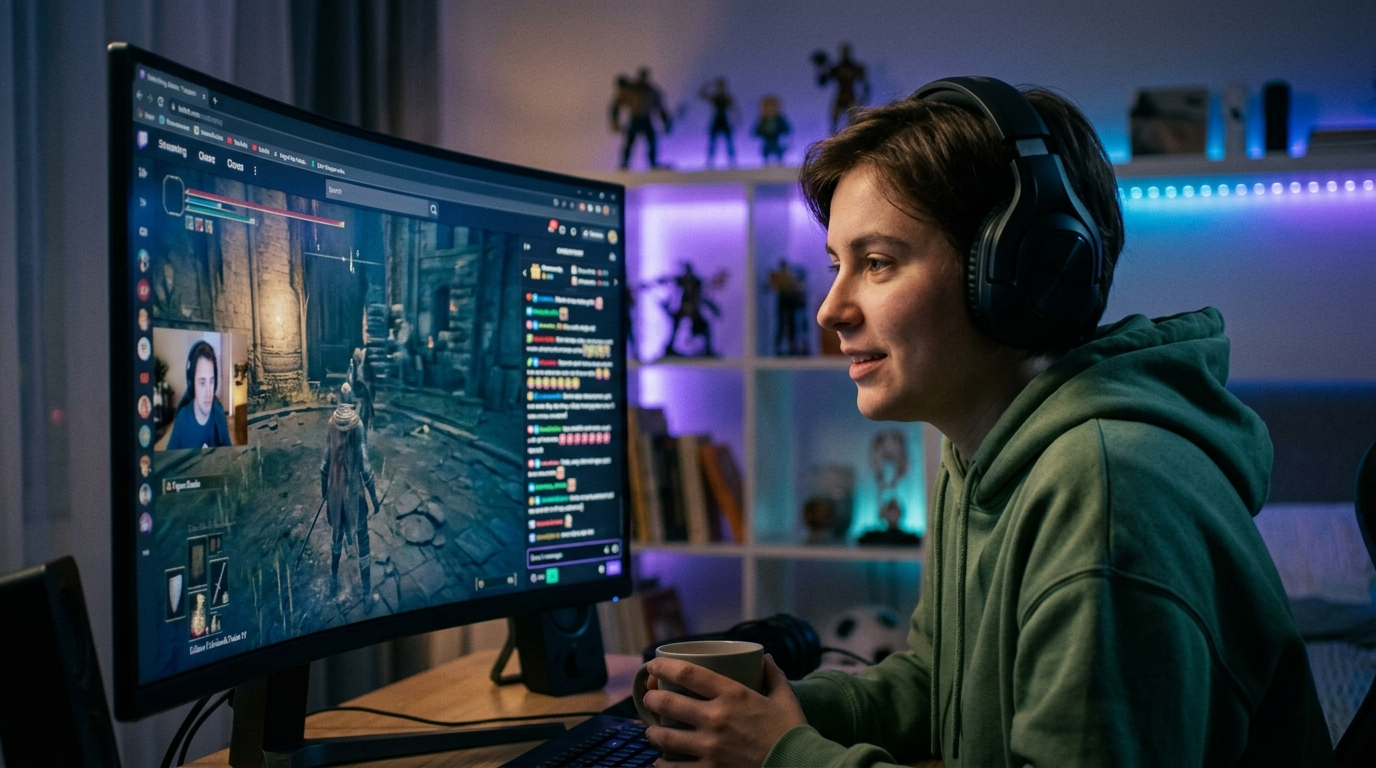
The corner pub, the community center, the union hall — the physical spaces where working-class culture organized, argued, and looked out for each other have largely disappeared. Owen Jones, Richard Sennett, and Barbara Ehrenreich examine what vanished with them, and whether anything digital has come close to replacing what those rooms actually did.
The gradual disappearance of third places — those vital spaces beyond home and work where communities gather — has sparked important questions about social cohesion, civic engagement, and the changing fabric of everyday life. As the corner pub, union hall, and community center fade from the landscape, what has stepped in to fill their roles?
Context
Sociologist Ray Oldenburg coined the term "third place" to describe the informal gathering spots that serve as the heart of a community's social life. These spaces — from barbershops to bowling alleys, from union halls to community centers — provided more than just physical space. They offered belonging, civic identity, and the infrastructure for collective action. Their decline raises profound questions about where community now lives — and whether it lives anywhere at all.
Perspective: Owen Jones
Owen Jones, journalist and author of Chavs: The Demonization of the Working Class, argues that the loss of working-class third places represents a devastating blow to social solidarity and political organization. "The union hall and the working men's club were not just places to drink or socialize — they were schools of democracy, where people learned to organize, advocate, and develop collective power," he states.
Jones contends that their disappearance is not accidental but rather the result of deliberate economic and political policies that systematically weakened working-class institutions. "When you destroy the spaces where solidarity is built, you don't just lose a pub or a club — you lose the organizational infrastructure that allows communities to advocate for themselves."
Perspective: Richard Sennett
Richard Sennett, sociologist and author of The Fall of Public Man, examines the broader cultural implications of third place decline. He argues that these spaces cultivated a crucial capacity for civic life — the ability to interact with and learn from people unlike ourselves.
"Third places were laboratories of civic skill," Sennett explains. "They required people to navigate difference, practice tolerance, and develop the social muscles needed for democratic participation." He warns that without these spaces, society risks becoming more fragmented and tribal — with people retreating into homogeneous bubbles that reinforce existing beliefs rather than challenging them.
Perspective: Barbara Ehrenreich
Barbara Ehrenreich, author of Nickel and Dimed, approaches the question from the perspective of working people's lived experience. She highlights how third places provided essential social support networks for communities facing economic hardship. "When you're working multiple low-wage jobs just to survive, the local bar or community center wasn't just a luxury — it was where you found out about job opportunities, got help in a crisis, and maintained your sanity," she explains.
Ehrenreich is skeptical that digital alternatives have successfully replaced these functions. "Social media gives the illusion of connection while often deepening isolation. You can't share a meal or a drink through a screen, and those physical acts of shared presence were central to what third places provided."
Editorial Synthesis
Where Experts Agree
All three experts recognize that third places provided functions that cannot be easily replicated — whether through digital platforms or formal institutions. The decline of these spaces has coincided with and likely contributed to increasing social isolation, political disengagement, and weakened community bonds. Economic and political forces have played a significant role in their disappearance.
Where Experts Disagree
Jones emphasizes the political and organizational dimensions of third place loss, while Sennett focuses on civic culture and cross-cultural interaction. Ehrenreich highlights the practical support functions these spaces provided for vulnerable communities. Their assessments of potential replacements also vary — with Jones most skeptical and Sennett more open to reimagined public spaces.
Why This Matters
The disappearance of third places is not merely a nostalgic loss — it represents a fundamental challenge to the conditions that make democratic community life possible. As societies grapple with rising polarization, loneliness, and civic disengagement, the question of where community happens — and how to create the conditions for it to flourish — has never been more urgent.
Rebuilding these spaces — whether physical or in genuinely new forms — may be one of the most important investments societies can make in their own social fabric, democratic health, and collective well-being.
Community in the Age of Speed: A Double-Edged Sword
As Twitch continues to thrive with millions of users, the essence of community in this vibrant platform remains both compelling and complex. Dr. Smith's observations highlight a critical dichotomy: while the rapid interaction on Twitch cultivates a sense of belonging, the fleeting nature of chat messages often renders those connections superficial. This challenges our conventional understanding of community, as many viewers may feel part of a larger narrative without engaging deeply. Thus, while Twitch offers a unique shared experience, we must acknowledge the bittersweet reality that true communal bonds might be diluted in its fast-paced environment. The question then becomes whether such connections, albeit shallow, have value in their own right, or if they merely distract from the solitude that streams can sometimes evoke.

Dr. Jonathan Smith
Cultural Anthropologist
"Dr. Smith argues that Twitch creates a unique social environment where viewers connect through shared experiences, making it a valid community despite the speed of chat. He emphasizes that these interactions foster a sense of belonging and connection among viewers."
𝕏 Dr. Jonathan Smith in Dr. Jonathan Smith
Elena Vasquez
Content Creator & Streaming Expert
"Elena acknowledges that while Twitch allows viewers to feel part of something larger, the fleeting nature of interactions can dilute the depth of community engagement. She advocates for a balanced view that recognizes both the value and limitations of viewing as community involvement."
𝕏 Elena Vasquez in Elena Vasquez
Mark Thompson
Media Theorist
"Mark contends that despite the energetic atmosphere of Twitch chats, the superficial nature of interactions renders it less of a genuine community. He argues that true community requires deeper relationships that are often absent in fast-paced, distracted environments like Twitch."
in Mark ThompsonHow Does This Hit You?

No comments yet. Be the first to weigh in.