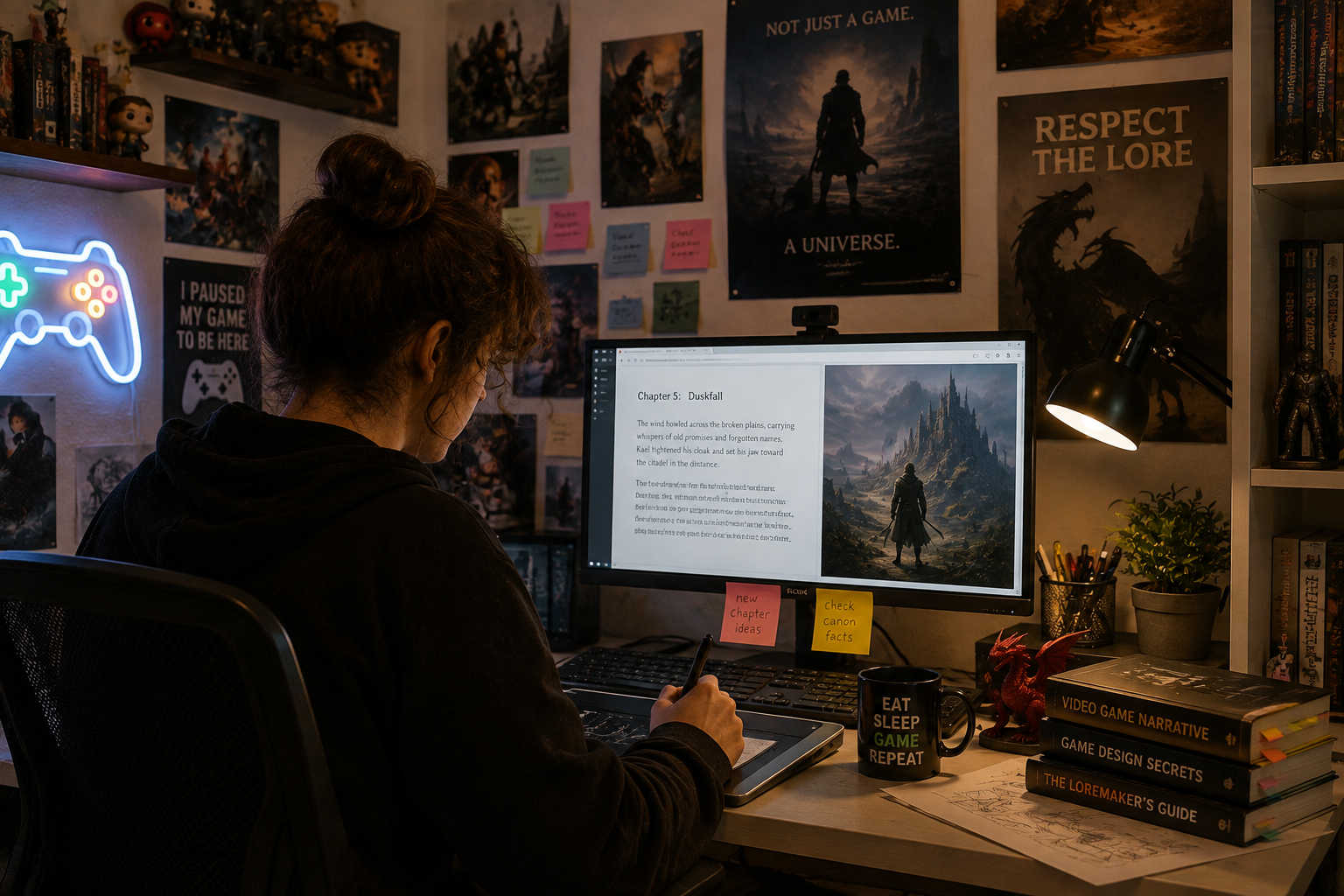
Fan fiction has helped keep many game worlds alive—but it also challenges traditional ideas of ownership. While studios have the legal right to protect their intellectual property, fans often expand and sustain fictional universes through stories, art, and community engagement. Experts agree that existing copyright laws were not designed for today's participatory culture, leaving developers and fan creators searching for a balance between protecting creative rights and encouraging passionate communities.
Opening Question
Who truly owns a fictional universe once millions of fans begin expanding it?
Video game franchises inspire communities that often go far beyond simply playing the games. Fans write stories, create artwork, build timelines, and imagine entirely new adventures that deepen the worlds they love. Yet when studios issue cease-and-desist letters against fan creators, a difficult question emerges: where does intellectual property protection end, and community creativity begin?
As gaming becomes one of the world's dominant forms of entertainment, this debate is becoming increasingly important.
Why This Matters Now
Modern gaming communities are more collaborative than ever.
Through fan fiction, online forums, social media, mods, and community-created content, players actively contribute to the cultural life of franchises long after official releases.
For many series, these fan communities maintain interest during years between sequels, introduce new audiences to older titles, and keep discussion alive.
At the same time, game studios face legitimate concerns about protecting copyrighted characters, stories, and trademarks that represent significant creative and financial investments.
Finding the balance between those interests has become one of gaming's most challenging legal and cultural questions.
Expert Perspectives
Cory Doctorow: Fans Expand the World
Author and digital rights advocate Cory Doctorow argues that fan fiction strengthens fictional universes rather than threatening them.
In his view, fan-created stories represent an extension of culture itself.
Communities build emotional connections by exploring unanswered questions, alternative endings, and new perspectives that official creators may never produce.
Doctorow believes these contributions help franchises remain culturally relevant between official releases.
He also argues that copyright systems developed long before today's highly participatory internet communities struggle to reflect how modern audiences interact with creative works.
Rather than viewing fans as adversaries, he believes companies should recognize them as contributors who help sustain long-term interest in their intellectual property.
David Cole: Intellectual Property Requires Protection
Intellectual property attorney David Cole approaches the issue from a legal standpoint.
He argues that copyright protections exist because creators need control over how their work is used.
Without enforceable ownership rights, studios could lose the incentive to invest heavily in developing original games, characters, and fictional worlds.
Although Cole acknowledges that fan fiction often reflects genuine admiration, he maintains that companies cannot selectively ignore unauthorized uses of copyrighted material without potentially weakening their legal position.
From this perspective, cease-and-desist letters may appear unpopular but remain an important tool for protecting intellectual property.
Katherine Cross: There Is Room for Both
Games writer Katherine Cross sees value in both perspectives.
She recognizes fan fiction as one of the strongest expressions of community passion while acknowledging that studios have legitimate ownership interests.
Rather than relying primarily on legal enforcement, Cross encourages developers to create structured ways for fans to participate.
Examples include:
- Official fan fiction contests
- Community storytelling events
- Licensed creative programs
- Canon-adjacent writing initiatives
She argues that collaborative programs can strengthen relationships between developers and fans without requiring companies to surrender control over their intellectual property.
Editorial Synthesis
Where Experts Agree
Despite their different conclusions, the experts agree on several important points.
They agree that:
- Fan fiction plays a meaningful cultural role within gaming communities.
- Modern fan participation has changed how fictional worlds evolve.
- Existing intellectual property frameworks face challenges in the digital era.
- Better dialogue between studios and fans would benefit both sides.
Where Experts Disagree
The primary disagreement concerns ownership.
Doctorow argues that fictional universes increasingly become shared cultural spaces shaped by both creators and fans.
Cole maintains that legal ownership must remain firmly with the original creators to preserve incentives for innovation.
Cross advocates a middle ground in which studios maintain legal rights while actively encouraging fan creativity through officially supported initiatives.
Why Fan Communities Matter
Fan-created content provides value beyond entertainment.
It often:
- Keeps interest alive between game releases.
- Builds stronger player communities.
- Introduces new audiences to existing franchises.
- Encourages deeper engagement with fictional worlds.
- Inspires future developers, writers, and artists.
Many professionals working in today's gaming industry first developed their creative skills through fan projects.
Why This Matters
The debate over fan fiction is about far more than copyright law.
It reflects changing ideas about creativity in an age where audiences no longer consume stories passively—they actively participate in expanding them.
Studios have understandable reasons to protect their intellectual property, but communities also contribute meaningfully to the longevity and cultural significance of many franchises.
The challenge going forward is not choosing between creators and fans, but finding models that respect both legal ownership and community creativity.
As digital culture continues to evolve, the most successful fictional worlds may be those that protect their foundations while still leaving room for passionate fans to imagine what comes next.
Embracing Fan Creativity: A Call for Collaboration
The clash between game studios and their fan communities over ownership of narrative worlds poses a critical challenge that cannot be ignored. As vocal stewards of their beloved franchises, fans have proven their ability to cultivate and expand game lore in ways that traditional marketing and narratives sometimes fail to achieve. The increasing trend of cease and desist orders not only stifles creativity but also alienates the very audiences that companies rely on. Rather than reverting to legal ceasefires, studios should consider adopting collaborative approaches that legitimize fan contributions, recognizing them as an integral part of the gaming landscape. This could foster loyalty, engagement, and ultimately, a richer narrative universe. By valuing and embracing their fans as co-creators, studios can transform potential legal battles into partnerships that benefit everyone involved, ensuring that the worlds they have built together continue to evolve and thrive.
Cory Doctorow
Author and Activist
"Doctorow argues that fan fiction and community-created content are vital to the ongoing life of franchises and should be embraced rather than suppressed by corporations. He believes that these contributions not only enhance the lore but also foster a dedicated fan base that drives sales and engagement."
𝕏 Cory Doctorow in Cory Doctorow
David Cole
Attorney specializing in IP Law
"Cole posits that intellectual property laws are essential to protecting the rights of creators and ensuring that original works are not diluted by unregulated fan fiction. He emphasizes that while fan works can be meaningful, creators should maintain control over their intellectual properties."
in David ColeKatherine Cross
Game Culture Critic
"Cross highlights the complexity of ownership in fan-created content, arguing that while fan fiction enriches the narrative landscape, it complicates the relationship between corporations and their audiences. She advocates for a middle ground that recognizes fans' contributions without undermining creators' rights."
𝕏 Katherine Cross in Katherine CrossHow Does This Hit You?


No comments yet. Be the first to weigh in.