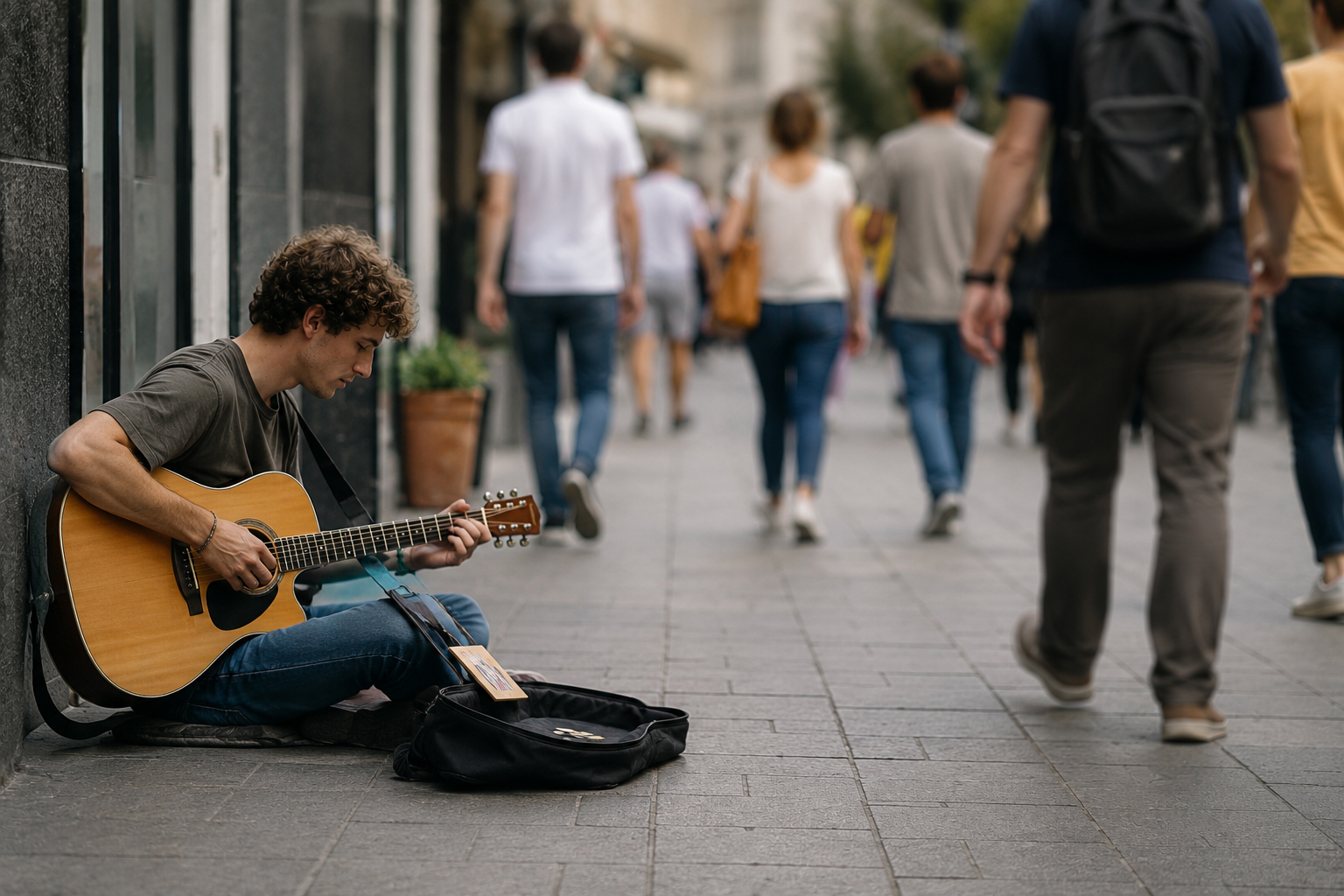
Before talent shows, streaming platforms, and social media algorithms, many musicians got their start on a sidewalk with an instrument case and a hopeful audience. Busking has long served as one of the most accessible entry points into the music industry, allowing artists to develop their craft, earn income, and connect directly with listeners. Yet as cities introduce stricter regulations and, in some cases, outright bans on street performances, questions are emerging about the future of grassroots creativity. Supporters argue that busking is essential to vibrant urban culture, while policymakers cite concerns about safety, noise, and public space management. The debate raises a larger issue: what happens when aspiring artists lose one of the few stages available to everyone?
Long before viral videos, talent competitions, and streaming platforms, aspiring musicians had a simpler path to discovery:
A street corner.
A guitar case.
A crowd willing to stop and listen.
For generations, busking served as one of the most accessible gateways into music. It allowed artists to experiment, develop confidence, earn money, and build audiences without needing industry connections or financial backing.
Today, however, many cities are tightening restrictions on street performances.
Some require permits.
Others limit where musicians can play.
A growing number have moved toward outright bans in certain areas.
This raises an important question:
If cities remove one of the most accessible stages in the world, where will the next generation of artists begin?
Why This Matters Now
The debate arrives at a particularly important moment for the music industry.
Live performances have rebounded following the pandemic, yet opportunities for emerging artists remain limited.
Traditional pathways into music have become increasingly competitive and expensive.
At the same time, public spaces are facing greater scrutiny over issues such as:
- Noise complaints
- Pedestrian congestion
- Public safety
- Commercial activity
- Urban management
Busking sits directly at the intersection of these competing priorities.
The question is no longer whether busking matters, but whether cities still view it as an essential part of public life.
Expert Perspectives
Ben Haggerty: Busking as a Creative Foundation
Musician and activist Ben Haggerty argues that busking is far more than a way to earn extra money.
For many artists, it is where their careers truly begin.
"Busking isn't merely about making a few dollars; it's foundational."
Street performance allows musicians to experiment in real time, learning what resonates with audiences and developing their artistic identity.
Unlike traditional venues, busking removes many barriers to entry.
Artists do not need:
- Industry approval
- Venue bookings
- Ticket sales
- Formal representation
All they need is the willingness to perform.
"When cities restrict street performances, they directly undermine a culture of creativity."
Haggerty sees busking as a form of public art that makes culture accessible to everyone, regardless of income.
When performance moves exclusively behind ticketed doors, creativity becomes less democratic.
Rachel McCarthy: The Need for Balance
Urban policy expert Rachel McCarthy takes a more cautious approach.
While recognizing the value of busking, she argues that cities must balance artistic freedom with practical concerns.
"While I recognize the importance of busking in cultivating talent, cities must also consider public safety and the economic impact of uncontrolled street performances."
According to McCarthy, public spaces serve multiple constituencies.
Cities must navigate issues such as:
- Crowd management
- Noise levels
- Business concerns
- Accessibility
- Resident complaints
Rather than banning busking entirely, McCarthy advocates for structured solutions.
"We need to structure opportunities rather than outright banning them."
Designated performance zones, permit systems, and clear guidelines can allow street culture to flourish while minimizing conflict.
The challenge is not eliminating busking but integrating it into modern urban life.
David Byrne: Public Art as Public Life
Musician and author David Byrne views busking as a vital part of a healthy cultural ecosystem.
For Byrne, street performance provides something that traditional venues cannot:
Immediate intimacy between artist and audience.
"It's not just about exposure; it's about the intimacy between the artist and the audience."
Busking creates spontaneous encounters with art.
A passerby who never intended to attend a concert can suddenly discover a new artist.
According to Byrne, this accessibility is especially important for emerging musicians and marginalized communities.
"Art should not be a luxury. It should be as available as fresh air."
He argues that removing street performance opportunities risks making culture less inclusive and less visible within everyday urban life.
Great cities are often defined by what happens between their buildings, not simply inside them.
Editorial Synthesis
Where Experts Agree
Despite their differing priorities, all three experts acknowledge several important realities:
- Busking plays a valuable role in developing musical talent.
- Public spaces benefit from artistic and cultural activity.
- Cities have legitimate concerns regarding safety and management.
- Street performance contributes to the cultural identity of urban environments.
Where Experts Disagree
Regulation vs. Restriction
Haggerty and Byrne view growing restrictions as threats to artistic accessibility.
McCarthy sees thoughtful regulation as necessary for balancing competing public interests.
What Is Public Space For?
Some experts believe public spaces should prioritize cultural expression whenever possible.
Others argue that cities must carefully manage those spaces to accommodate diverse needs.
The Cost of Control
Critics of restrictions worry that regulations disproportionately affect emerging artists.
Supporters argue that unmanaged public performance can create challenges for residents, businesses, and local governments.
Why This Matters
The debate over busking extends far beyond music.
It reflects a broader question about who has access to public space—and who gets to participate in public culture.
Historically, busking has served as one of the few artistic pathways available regardless of background, education, or financial resources.
For countless musicians, it provided:
- Practice
- Exposure
- Income
- Confidence
- Community
As cities become increasingly regulated, opportunities for spontaneous creativity often become harder to find.
The danger is not simply that street performances disappear.
It is that the next generation of artists loses a critical place to learn, experiment, and be discovered.
At the same time, legitimate concerns around safety and urban management cannot be ignored.
The challenge is finding a framework that protects both public order and public creativity.
Because when cities remove spaces for emerging artists, they may also remove the conditions that produce future culture.
Busking has always been more than entertainment.
It is one of the rare places where talent, opportunity, and public life intersect without a gatekeeper.
And if that stage disappears, the question becomes:
Who gets discovered when discovery itself requires permission?
The Vital Role of Busking in Musical Innovation
As cities grapple with the challenges of modern urban life, the decision to ban busking threatens to stifle the very essence of creativity that fuels our music scene. Busking is not merely a way for artists to make money; it is a vital incubator for talent, offering musicians a platform to grow, innovate, and connect with diverse audiences. While safety and urban management are undeniably important, they should not come at the expense of artistic expression and potential career-building opportunities. A more balanced approach that embraces street performances while addressing logistical concerns can make our cities more vibrant cultural hubs, benefiting artists and communities alike. The time has come to advocate for policies that protect and promote busking, ensuring that the sidewalks remain stages for tomorrow’s stars.

Ben Haggerty
Musician, Activist
"Ben argues that busking provides essential opportunities for artists to hone their craft and connect with audiences. He believes banning it restricts access to crucial early career experiences, especially for underprivileged artists."
𝕏 Ben Haggerty in Ben Haggerty
Rachel McCarthy
Urban Policy Expert
"Rachel promotes a balanced view, advocating for regulations that protect public safety and residents while still allowing space for street performers. She believes it’s possible to find a compromise that accommodates both concerns."
in Rachel McCarthyDavid Byrne
Musician and Author
"David argues that while busking is valuable, cities must regulate it to maintain public order and respect for diverse community needs. He believes that properly managed busking can enhance urban culture without compromising safety."
in David ByrneHow Does This Hit You?

urrxeynuolumhszqtlolrxevelozqe
mdlysozszinkwdzrpxrqnxploofsrz