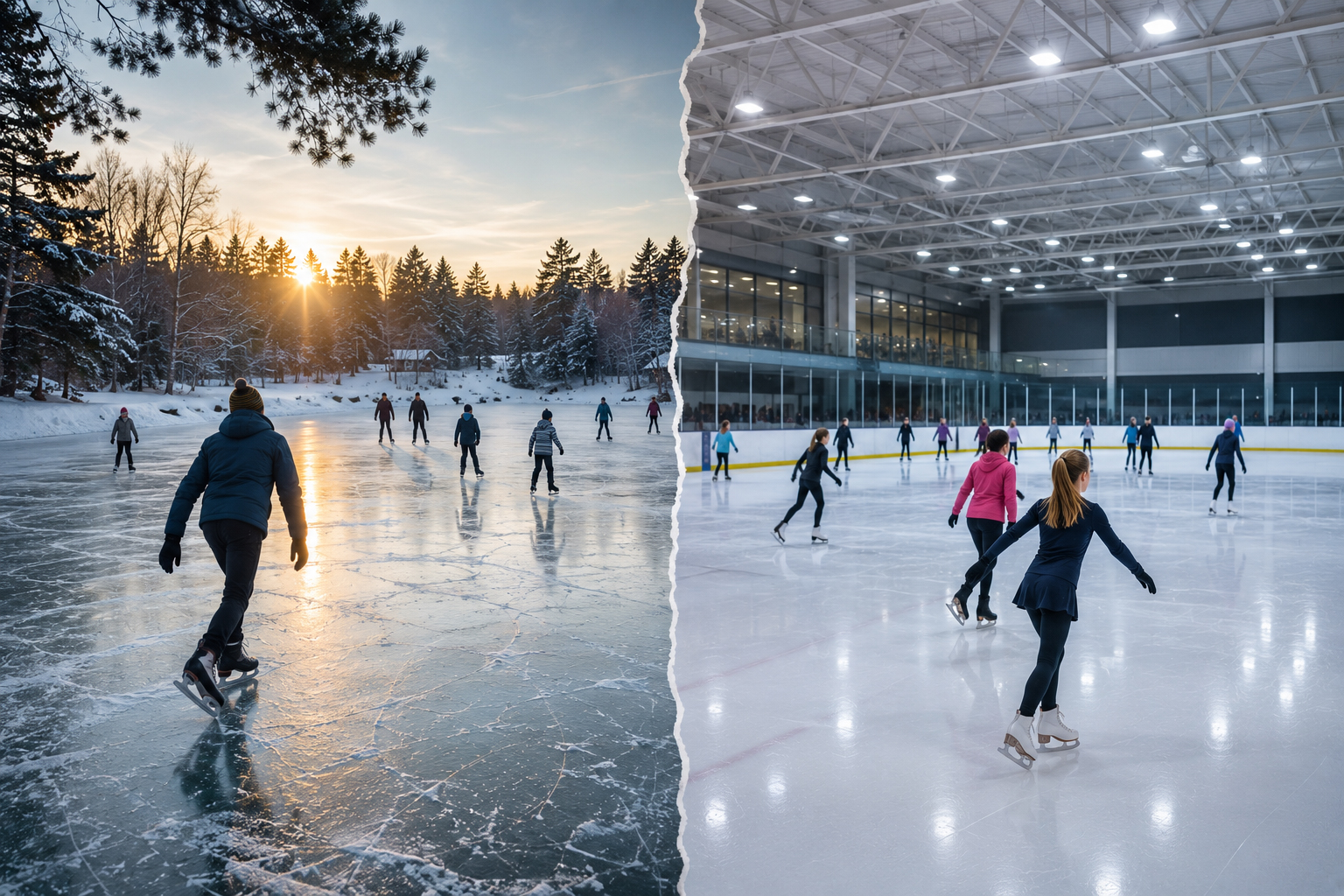
Frozen ponds and backyard rinks gave ice skating its soul — climate-controlled arenas gave it a future. Sarah Hughes, Tessa Virtue, and Mark Bremer debate whether indoor facilities have made the sport more accessible than ever, or traded away the elemental magic that made gliding on natural ice feel like something sacred.
Is the essence of ice skating diluted by the rise of indoor arenas that allow the sport to flourish year-round? While modern facilities have expanded access and opportunities, do they compromise the rich, elemental experience that outdoor skating once provided?
Context
The conversation surrounding ice skating has taken on renewed significance in recent years. With climate change impacting outdoor ice conditions, and increasing interest in skating as a recreational activity, arenas have become a mainstay. As Olympic Gold Medalist Sarah Hughes notes, "The feel of gliding on natural ice is a unique sensation that resonates with the sport's roots."
Perspective: The Charm of Outdoor Ice
From backyard rinks to frozen ponds, outdoor ice skating has a charm that few can replicate. Sarah Hughes articulates this sentiment, noting, "Skating outdoors is an experience steeped in nostalgia, where each crack in the ice tells a story."
She emphasizes the connection to nature — the crunch of snow, the cold air, and the surrounding landscape — which contribute to the richness of the experience. Tessa Virtue, a World Champion Ice Dancer, highlights the community aspect of outdoor skating, where families build backyard rinks together, fostering bonds both on and off the ice. "There's a sense of camaraderie that comes from sharing those moments, which indoor facilities can sometimes lack," she notes, connecting these experiences to personal growth.
Perspective: The Advantages of Indoor Arenas
In stark contrast, Mark Bremer, CEO of Ice Facility Operations, argues that indoor arenas have revolutionized the sport, democratizing access to ice skating.
Bremer notes that consistent conditions are crucial for training and development. "In an indoor facility, you don't need to worry about weather; athletes can focus on their craft without interruptions." This reliability has allowed more structured training regimens. He also points out the year-round accessibility that has allowed families to engage with the sport, using facilities for recreation, lessons, and improving skills.
Virtue concurs on the matter of enhanced safety, emphasizing how it can lead to better focus on performance. "Athletes can hone their skills rather than worrying about their safety," she states.
Editorial Synthesis
Where Experts Agree
All experts see the benefit of increased participation through indoor arenas, fostering growth in the sport. Despite differing perspectives, there is a shared understanding that outdoor skating holds a nostalgic value that can't be easily replicated. Each expert also acknowledges the unique emotional and sensory experiences provided by traditional outdoor skating.
Where Experts Disagree
The fundamental tension lies in the question of authenticity, with Hughes and Virtue championing outdoor experiences over what they see as the sterility of indoor arenas, while Bremer focuses on the benefits these facilities provide. Bremer believes the continued development of indoor arenas will only enhance the sport, while Hughes and Virtue feel this might lead to a disconnect from its roots.
Why This Matters
The evolution of ice skating reflects broader societal changes, including how we interact with and experience nature versus technology. The rise of indoor arenas presents notable advantages — convenience, safety, and accessibility. However, the intuition and narrative surrounding outdoor skating should not be neglected.
Understanding each perspective is critical for fostering a more inclusive skating culture that honors tradition while embracing innovation — ensuring that ice skating remains alive for generations to come, balancing improved access with the wonder of its natural origins.
Finding Balance: Embracing Tradition While Embracing Modernity
The debate around the impact of indoor arenas on the essence of ice skating invites us to acknowledge the unique experiences that both outdoor and indoor environments provide. While modern facilities undeniably democratize access to the sport and allow for year-round participation, they can also dilute the nostalgia and emotional connections rooted in outdoor skating. It's crucial for the skating community to find a balance—championing the expansion of access while also preserving and celebrating the charm of outdoor skating. Whether it's through creating outdoor pop-up rinks during winter months or encouraging local initiatives to maintain traditional rinks, the goal should be to ensure that the heart of ice skating remains vibrant and connected to its historical roots. In striving for innovation, we must not lose sight of the cold, magical experiences that first drew us to the ice.
Sarah Hughes
Olympic Gold Medalist
"While indoor arenas provide year-round opportunities for skating, they can dilute the natural essence of the sport, which thrived on outdoor charm and community spirit. Ice skating should retain its connection to nature and neighborhood traditions."
in Sarah HughesTessa Virtue
World Champion Ice Dancer
"Indoor arenas have undeniably expanded access and participation in ice skating, making it a more inclusive sport. However, the loss of grassroots experiences can diminish the sport's roots and cultural significance."
in Tessa VirtueHow Does This Hit You?


No comments yet. Be the first to weigh in.