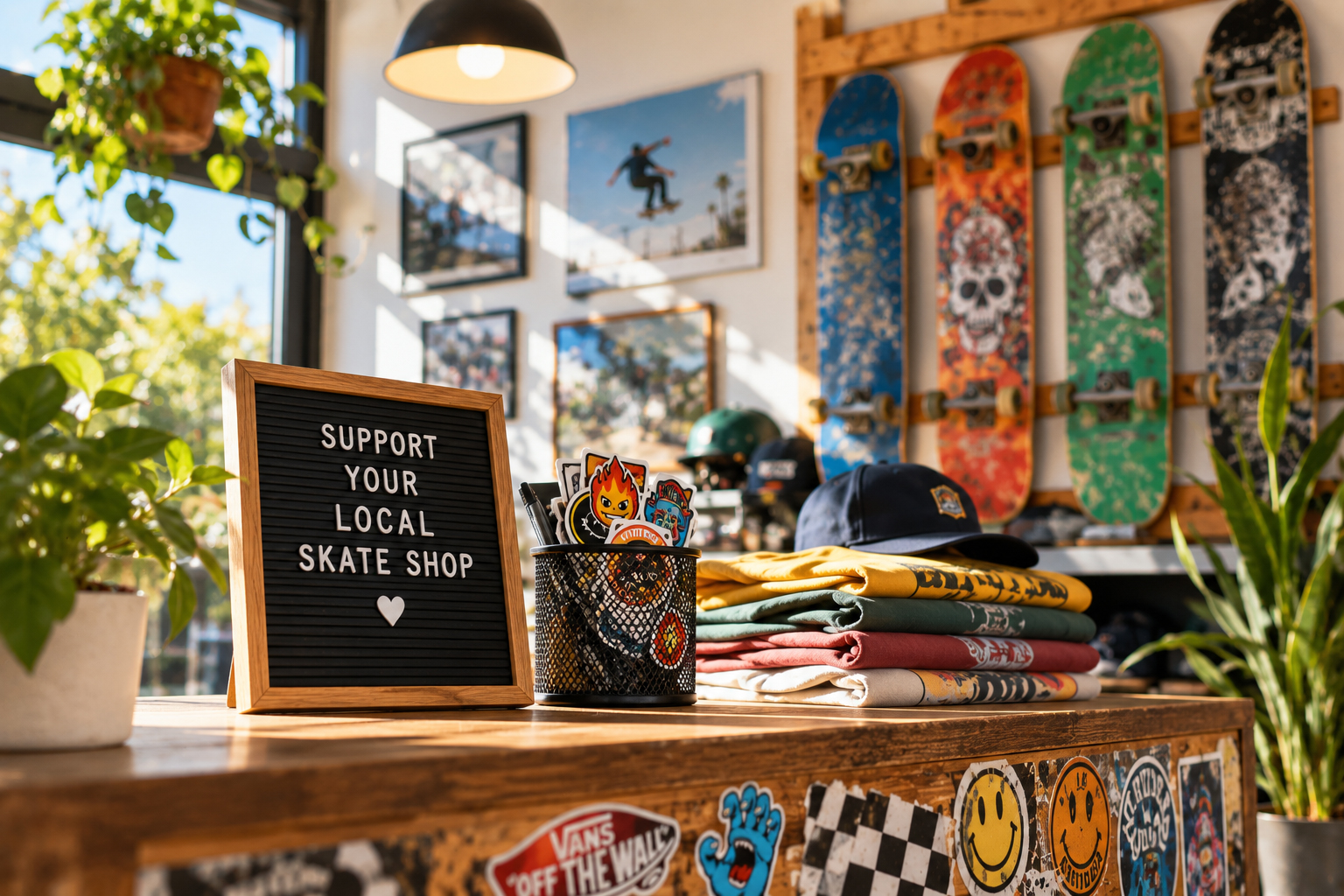
A skateboard now arrives in a day with one click — but did that convenience quietly kill the only free social space a lot of kids ever had? Tommy Guerrero, Ryan Clements, and Lisa Whitaker debate whether local skate shops can survive the e-commerce era, and what's actually being lost if they don't.
PAGE EXCERPT
A skateboard now arrives in a day with one click — but did that convenience quietly kill the only free social space a lot of kids ever had? Tommy Guerrero, Ryan Clements, and Lisa Whitaker debate whether local skate shops can survive the e-commerce era, and what's actually being lost if they don't.
TEXTO CON NEGRITAS
Skate Shops: The Heart of Local Hangouts or Casualties of Online Retail?
As skateboarding continues to evolve in the digital age, a pressing question arises: Did the rise of online retail not only decimate sales for local skate shops but also rob kids of the only free social space they had?
Context: Why This Matters Now
As e-commerce burgeons, traditional brick-and-mortar stores, including local skate shops, face unprecedented challenges. These small businesses have historically served dual roles: as purveyors of gear and as communal hubs for aspiring skaters. With a generational shift towards online shopping — particularly among youth — there's growing concern about the diminishing avenues for in-person interaction.
Perspective: Tommy Guerrero — Professional Skateboarder & Artist
Tommy Guerrero argues that skate shops were much more than retail environments; they were cultural institutions that provided a safe space for community bonding. "In the past, skaters gathered at their local shops to exchange tricks, ideas, and dreams. It wasn't solely about buying gear; it was about forging identities and friendships."
Guerrero reflects on how social media and online retail have created a paradox where skaters can obtain their gear with a click, but at the cost of personal connections. "You might get your skateboard delivered in a day, but what are you sacrificing in terms of community and connection?" he questions.
Perspective: Ryan Clements — Skate Shop Owner & Advocate
Ryan Clements echoes Guerrero's sentiments, emphasizing the integral role local skate shops play in nurturing the next generation of skaters. "You can't quantify the experience of walking into a shop, being greeted by familiar faces, and sharing stoke for the sport. That atmosphere can't be replicated online."
Clements views the rise of online retail as both a challenge and an opportunity. While many shops suffer declining foot traffic, he believes there is potential for skate shops to adapt, utilizing social media and online platforms to reinforce community connectiveness. "We can leverage online tools while preserving that sanctity of in-person gatherings."
Perspective: Lisa Whitaker — Cultural Anthropologist
Cultural anthropologist Lisa Whitaker adds a broader socio-cultural lens, arguing that the decrease in local hangouts reflects wider societal shifts. "The intimate environment of a skate shop fosters a subculture that cannot be recreated in the digital realm. The loss of these shops signifies a loss of cultural richness."
Whitaker underscores that these spaces serve as sites for learning and identity formation. She warns of the potential isolation that comes from a purely online engagement model: "Youth need spaces where they can grapple with their identities. Without physical locations to congregate, you lose that primal aspect of community."
Editorial Synthesis
Where Experts Agree
Skate shops serve as critical community hubs, fostering personal connections and cultural richness. The social experience of shopping in-person cannot be replicated by online retail. There is collective acknowledgment that online sales impact foot traffic for local shops.
Where Experts Disagree
The degree to which skate shops can adapt to new business models varies — Clements remains hopeful, while Guerrero is more skeptical. Opinions also diverge on the future viability of skate shops as cultural institutions in the digital age.
Why This Matters
The fate of local skate shops carries implications far beyond retail — it touches on issues of community, culture, and identity. As skateboarding increasingly becomes commodified, there's a danger that the unique essence of the sport — rooted in creativity, connection, and local identity — may be obscured.
The Vital Role of Skate Shops in Preserving Community
The conversation surrounding the decline of local skate shops highlights an essential truth: these spaces are more than just retail outlets; they are fundamental to youth culture and community bonding. As Tommy Guerrero and Ryan Clements express, the loss of these communal hubs goes beyond sales figures; it signifies a retreat from in-person connections that are critical for personal growth and identity formation among young skaters. While online retail offers convenience, it lacks the rich social fabric that once flourished in local shops. The challenge now lies in finding ways to adapt and innovate, ensuring these local stores can remain active participants in their communities. Embracing both traditional and modern avenues, skate shops can potentially reclaim their role as vital gathering spots, bridging the gap between the digital and physical realms of skateboarding culture.
Tommy Guerrero
Professional Skateboarder & Artist
"Skate shops have historically served as vital community spaces where kids could connect and share their passion. As online retail takes over, we risk losing these local hangouts that foster creativity and camaraderie among youth."
𝕏 Tommy Guerrero in Tommy Guerrero
Ryan Clements
Skate Shop Owner & Advocate
"While skate shops once served as community hubs, the changing retail landscape means we must adapt. Online shopping offers accessibility and convenience, which can actually help the industry evolve rather than eliminate the local hangout appeal."
in Ryan Clements
Lisa Whitaker
Cultural Anthropologist
"The shift to online retail has complicated the social fabric of skateboarding communities. While many local shops may have lost foot traffic, there are new opportunities for digital engagement that can complement traditional hangout spaces."
in Lisa WhitakerHow Does This Hit You?


No comments yet. Be the first to weigh in.