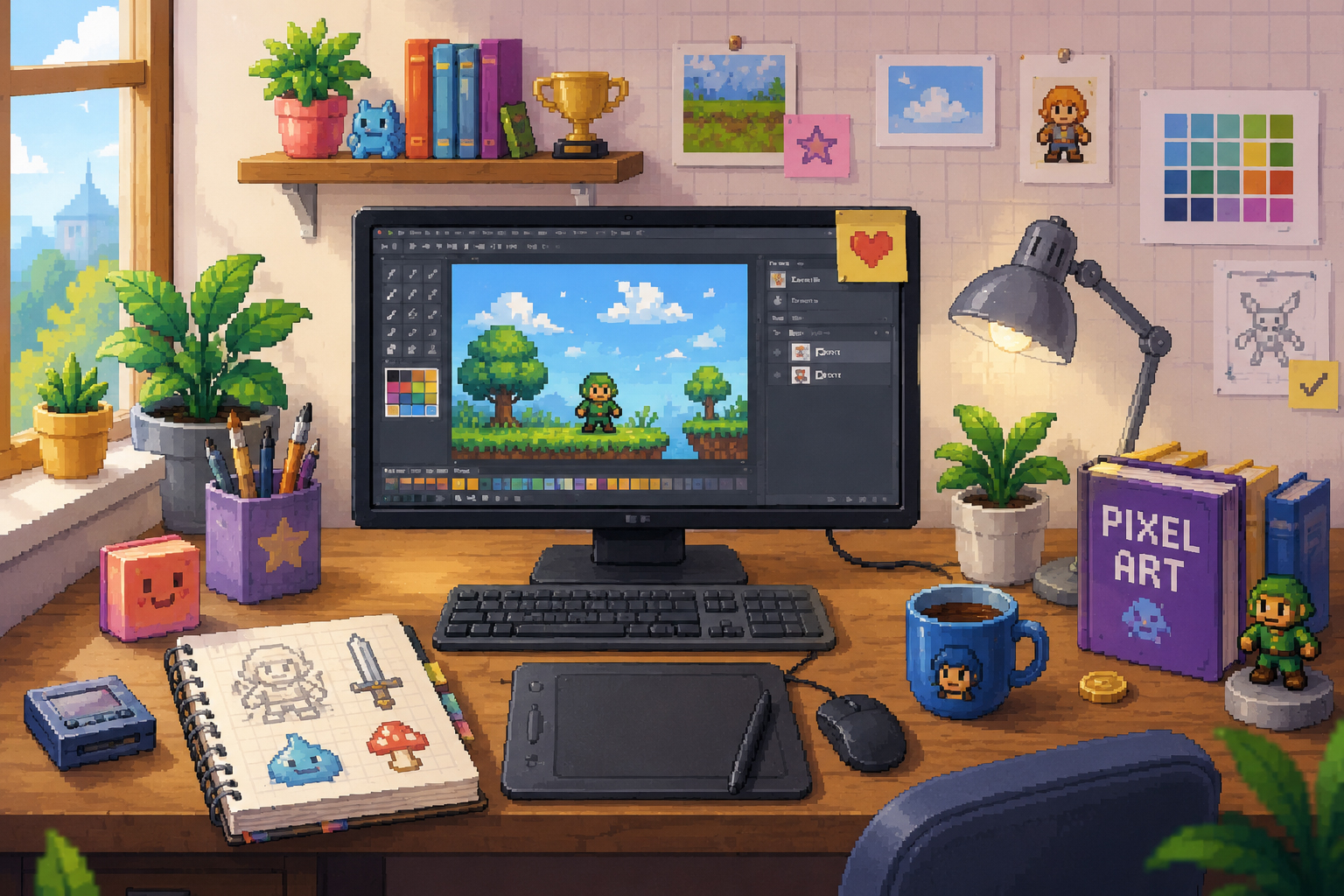
Game engines can render photorealistic worlds now — so why do so many studios choose blocky 8-bit sprites instead? Yoshio Sakamoto, Tina Chen, and Ernest Adams debate whether the pixel art revival is genuine artistic homage to gaming's roots, or a budget-friendly aesthetic dressed up as nostalgia.
In an era where technological advancements promise photorealistic graphics, why are many game developers deliberately opting for pixel art? Is the revival of this retro aesthetic an authentic homage to gaming's roots, or merely a cost-saving strategy?
Context
The resurgence of pixel art in video games has manifested prominently over the past few years. From indie darlings like Celeste to larger releases such as Octopath Traveler, this stylistic choice has become ubiquitous. As game engines grow more sophisticated and budgets balloon, pixel art has emerged as a point of contention: is it nostalgia-driven art or a reflection of budget constraints?
Perspective: Nostalgia and Creative Choice
Yoshio Sakamoto, a revered game designer at Nintendo, argues that pixel art has evolved from an industry necessity to an artistic choice reminiscent of a bygone era. "The charm of pixel art lies in its ability to evoke nostalgia," Sakamoto notes. He believes that these visually simplistic designs allow for greater emotional focus, effectively transporting players back to a time when gaming was more about creativity than graphics.
Tina Chen, an art director at an indie studio, echoes this sentiment. "Pixel art creates a unique space for expressing complexity within constraints," she explains. For some developers, the decision to embrace pixel aesthetics is a conscious artistic choice — a way to reclaim the innocence and innovation of early gaming.
Perspective: Budget Constraints and Market Trends
Conversely, industry consultant Ernest Adams takes a more pragmatic view. "While pixel art may seem like a tribute to the past, for many studios, especially smaller ones, it also comes down to budgetary limitations," he asserts. The costs associated with 3D modeling, animation, and assets can be substantial, particularly for indie teams operating on shoestring budgets. In this light, the choice of pixel art can often be a financially motivated decision cloaked in the guise of nostalgia.
This sentiment is affirmed by visible trends in the gaming landscape. As market size increases and competition escalates, studios are inclined to adopt styles that minimize production costs while maximizing audience engagement.
Editorial Synthesis
Where Experts Agree
Both creative and economic factors play vital roles in the use of pixel art. Nostalgia is a significant driver in the appeal of pixel aesthetics, resonating with players familiar with the original 8-bit and 16-bit eras. Pixel art allows for greater creative freedom and distinctive style within gaming.
Where Experts Disagree
The motivation behind adopting pixel art varies — some view it as a sincere homage, while others see it as a cost-effective choice. The implications for player experience also differ, with some believing it fosters a deeper emotional connection, while others feel it pales in comparison to modern graphics.
Why This Matters
Understanding the nuances of pixel art's modern trajectory is essential for grasping contemporary gaming culture. It encapsulates a broader dialogue regarding the value of nostalgia in an industry increasingly driven by consumer preferences — a tension between innovation and conservation, emotional engagement and financial realities.
As players, developers, and critics navigate this evolving landscape, the decision to choose pixel art over advanced graphics goes beyond aesthetics — it challenges us to examine our connections to art, memory, and the medium itself. Are studios simply capitalizing on nostalgia for profit, or is there a deeper, shared cultural experience at play? Only time will reveal the true motivations fueling this pixelated renaissance.
Navigating Nostalgia in Pixel Art
The resurgence of pixel art in gaming is a fascinating duality, balancing between a sincere homage to gaming history and a practical solution to modern budgetary constraints. While developers like Yoshio Sakamoto and Tina Chen highlight the emotional resonance and creative potential found within pixel aesthetics, industry realities cannot be overlooked. For many studios, particularly those operating on tight budgets, adopting this style can significantly reduce costs without sacrificing quality. Ultimately, the choice to use pixel art encapsulates a broader dialogue in the gaming community about authenticity and innovation. It invites players to reflect on their experiences while also questioning the motivations inherent in these artistic decisions. Pixel art may be a bridge between the past and present, reminding us that regardless of intention, what matters most is the joy and engagement these games bring to players around the world.
Yoshio Sakamoto
Game Designer, Nintendo
"Pixel art serves as an homage to the aesthetic of classic games. It evokes a sense of nostalgia that players cherish, celebrating the roots of game design and art."
𝕏 Yoshio Sakamoto in Yoshio Sakamoto
Ernest Adams
Game Design Consultant
"Many developers revert to pixel art not merely for nostalgia, but also for cost-effective development. The resources required for a high-quality pixel graphics project are significantly lower than those needed for modern 3D titles."
in Ernest AdamsTina Chen
Art Director, Indie Studio
"While pixel art can evoke nostalgia, it also represents a stylistic choice. Many indie studios find it aligns with their creative vision, regardless of cost incentives. Thus, the motivation can vary widely."
in Tina ChenHow Does This Hit You?



No comments yet. Be the first to weigh in.